




When a Work Accident Turns Your Life Upside Down

Workplace injury attorneys help injured workers get the medical care, lost wages, and full compensation they deserve — whether through workers’ compensation, a lawsuit against a negligent third party, or a direct claim against a non-subscribing employer.
Here is a quick look at the top factors to consider when comparing work accident lawyers:
| Factor | What to Look For |
|---|---|
| Experience | Strong background handling workplace injury and personal injury claims |
| Track record | Proven results in settlements or verdicts for injured workers |
| Fee structure | Contingency fee arrangement, so you typically pay nothing upfront |
| Specialization | Experience with workers’ compensation, third-party claims, and non-subscriber cases |
| Availability | Clear communication, attorney access, and a free consultation |
| State knowledge | Familiarity with your state’s rules, deadlines, and claim procedures |
Every year, more than 200,000 workplace injuries are reported in Florida alone — according to data from the Bureau of Labor Statistics — and that number doesn’t even account for the tens of thousands more across states like Texas. Falls, machinery accidents, toxic exposure, and vehicle collisions can strike any worker in any industry, leaving families overwhelmed by medical bills, lost income, and a legal system they don’t understand.
The difference between a denied claim and a life-changing recovery often comes down to one thing: who is fighting for you.
I’m Joe Lopez, founder and lead trial attorney at Joe Lopez Law, with over 20 years of experience representing seriously injured Texans as one of the state’s top workplace injury attorneys — named a Texas Super Lawyer every year since 2019 and a lifetime member of the Multi-Million Dollar Advocates Forum. Read on to find out how to choose the right attorney and protect your recovery.
Understanding Workers’ Compensation and Your Legal Rights
In most states, workers’ compensation acts as a “no-fault” insurance system. This means that if you are injured while performing your job duties, you are generally entitled to benefits regardless of who caused the accident. You don’t have to prove your boss was “being a klutz” or that the company was cuting corners to receive help. However, there is a trade-off: in exchange for these guaranteed benefits, you usually lose the right to sue your employer for pain and suffering.
The primary benefits available under standard workers’ compensation include:
- Medical Expenses: Coverage for all “reasonable and necessary” medical treatment related to the work injury. This includes surgeries, hospital stays, physical therapy, and prescriptions.
- Lost Wages: Usually calculated as a percentage of your average weekly wage (often around 66 2/3%).
- Disability Payments: These can be temporary total disability (TTD), temporary partial disability (TPD), or permanent benefits if you cannot return to your previous level of work.
- Death Benefits: If a workplace accident results in a fatality, surviving dependents may receive financial support and funeral expenses.
In Texas, things get a bit more interesting. Texas is the only state in the country that allows employers to “opt out” of the workers’ compensation system. These employers are known as “non-subscribers.” If you work for a non-subscriber, you aren’t limited by the “no-fault” rules; you may actually have the right to sue your employer directly for full damages, including pain and suffering, if their negligence caused your injury.
Whether your case involves a construction site accident or a warehouse mishap, understanding the type of coverage your employer has is the first step toward recovery.
Workers’ Comp vs. Personal Injury Damages
| Benefit Type | Workers’ Comp | Personal Injury Lawsuit |
|---|---|---|
| Medical Bills | Covered (Authorized Doctors) | Full Recovery (Your Choice of Doctor) |
| Lost Wages | Partial (Percentage Caps) | Full Past and Future Lost Earnings |
| Pain and Suffering | Not Available | Available |
| Punitive Damages | Not Available | Available (in cases of gross negligence) |
| Fault Required? | No | Yes |
When to Sue: Third-Party Claims and Workplace Injury Attorneys
Just because you are receiving workers’ comp checks doesn’t mean your legal journey ends there. Many workers don’t realize that they can pursue a “third-party claim” alongside their workers’ comp case. A third-party claim is a personal injury lawsuit filed against someone other than your employer or a direct co-worker.
Common scenarios for third-party claims include:
- Defective Products: If a piece of heavy machinery malfunctions due to a manufacturing defect, you can sue the manufacturer.
- Subcontractor Negligence: On busy construction sites, an employee of a different company might drop a tool on you or operate a crane unsafely.
- Premises Liability: If you are making a delivery and trip on a dangerous, unrepaired walkway at another business, you may have a case for premises liability.
- Motor Vehicle Accidents: If you are driving for work and get hit by a distracted driver, that driver is a third party.
In Austin and throughout Travis County, slip and fall injury lawyers often see workplace cases where the property owner failed to maintain a safe environment for outside contractors. These claims are vital because they allow you to recover “non-economic” damages—like the physical pain and emotional trauma you’ve endured—which workers’ comp simply won’t pay for.
Identifying Negligence with Workplace Injury Attorneys
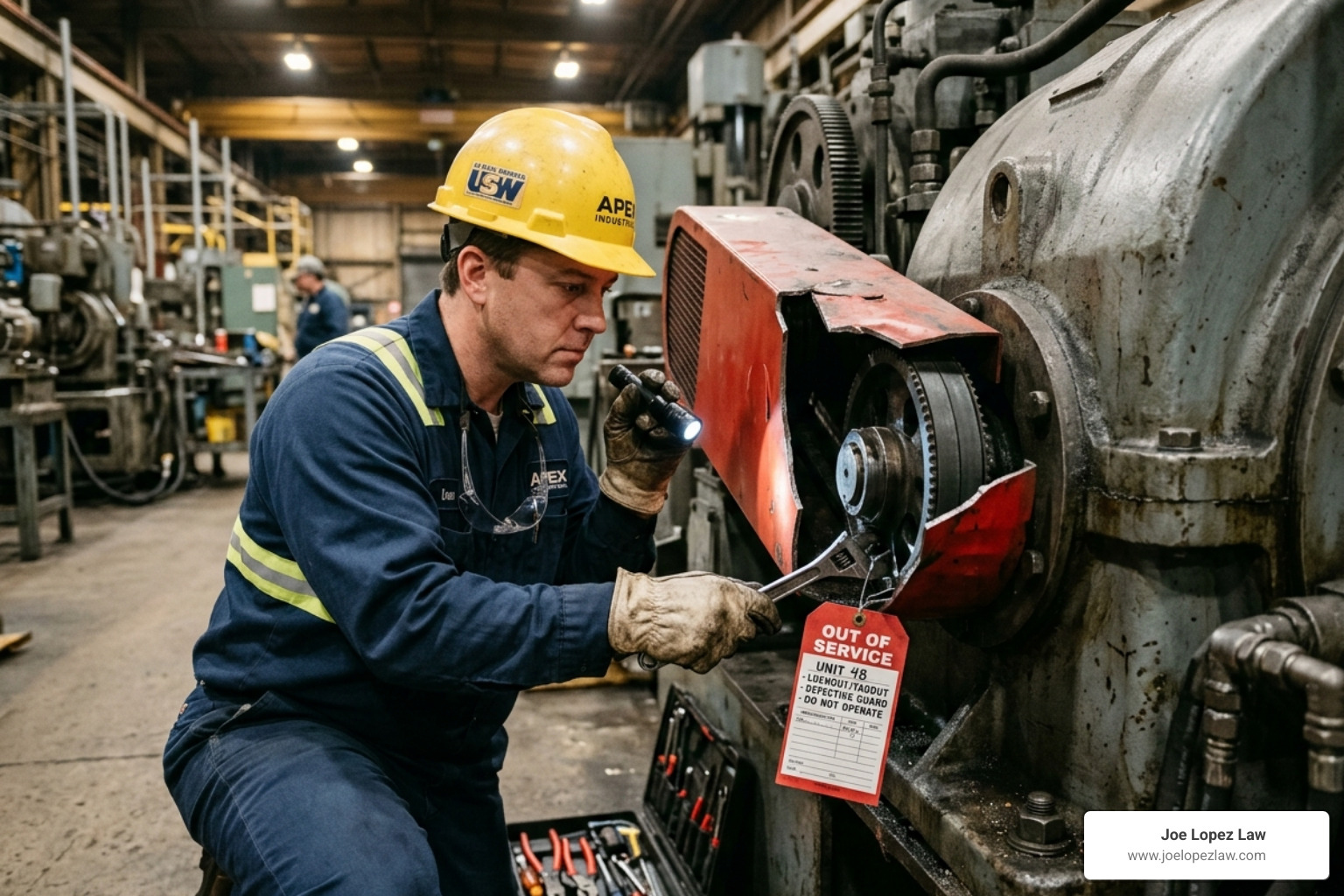
To win a third-party or non-subscriber lawsuit, workplace injury attorneys must prove four specific elements of negligence:
- Duty of Care: The party had a legal obligation to act reasonably to keep you safe.
- Breach of Duty: They failed to meet that obligation (e.g., failing to provide safety harnesses or ignoring frayed wiring).
- Factual Causation: Their specific failure was the direct cause of your injury.
- Damages: You suffered actual losses, such as medical bills or physical impairment.
Proving these elements requires an intensive investigation. We look for OSHA violations, maintenance logs, and witness statements. This is especially critical in high-stakes cases involving electrocution or severe burn injuries, where the long-term costs of care can reach into the millions.
Seeking Compensation with Workplace Injury Attorneys
When we take on a workplace case, we aren’t just looking at the bills you have today; we are looking at the rest of your life. An experienced Austin premises liability lawyer knows that a permanent disability changes everything—from your ability to play with your kids to your future career path.
We fight for comprehensive compensation, including:
- Permanent Disability: Compensation for the loss of use of a limb or permanent cognitive impairment.
- Vocational Rehabilitation: Training for a new career if you can no longer perform your old job.
- Loss of Consortium: Compensation for the impact the injury has on your relationship with your spouse.
- Death Benefits: Support for families who have lost a primary breadwinner in a fatal accident.
Common Types of On-the-Job Injuries and Accidents
Workplace accidents happen in a split second, but the repercussions last years. Statistics show that unintentional falls are consistently at the top of the list for days missed from work and overall economic impact. Whether it’s a fall from a height on a scaffolding or a trip over an unsecured cable in an office, the damage to the spine and brain can be catastrophic.
Beyond sudden accidents, many workers suffer from “occupational diseases” or repetitive stress injuries that develop over months or years. These include:
- Repetitive Stress Injuries: Carpal tunnel syndrome from typing or joint issues from repetitive lifting.
- Hand-Arm Vibration Syndrome (HAVS): Common in construction workers who use vibrating power tools daily, leading to permanent nerve and blood vessel damage.
- Toxic Exposure: Respiratory issues or cancers caused by inhaling asbestos, silica dust, or chemical fumes.
- Hearing Loss: Damage caused by sudden explosions or prolonged exposure to high-decibel machinery.
- Burn Accidents: Often occurring in industrial settings or kitchens, burn injuries require specialized, expensive long-term care.
Critical Steps to Take After a Workplace Accident
What you do in the first few hours and days after an injury can make or break your legal claim. Insurance companies are looking for any reason to deny your benefits, so you must be meticulous.
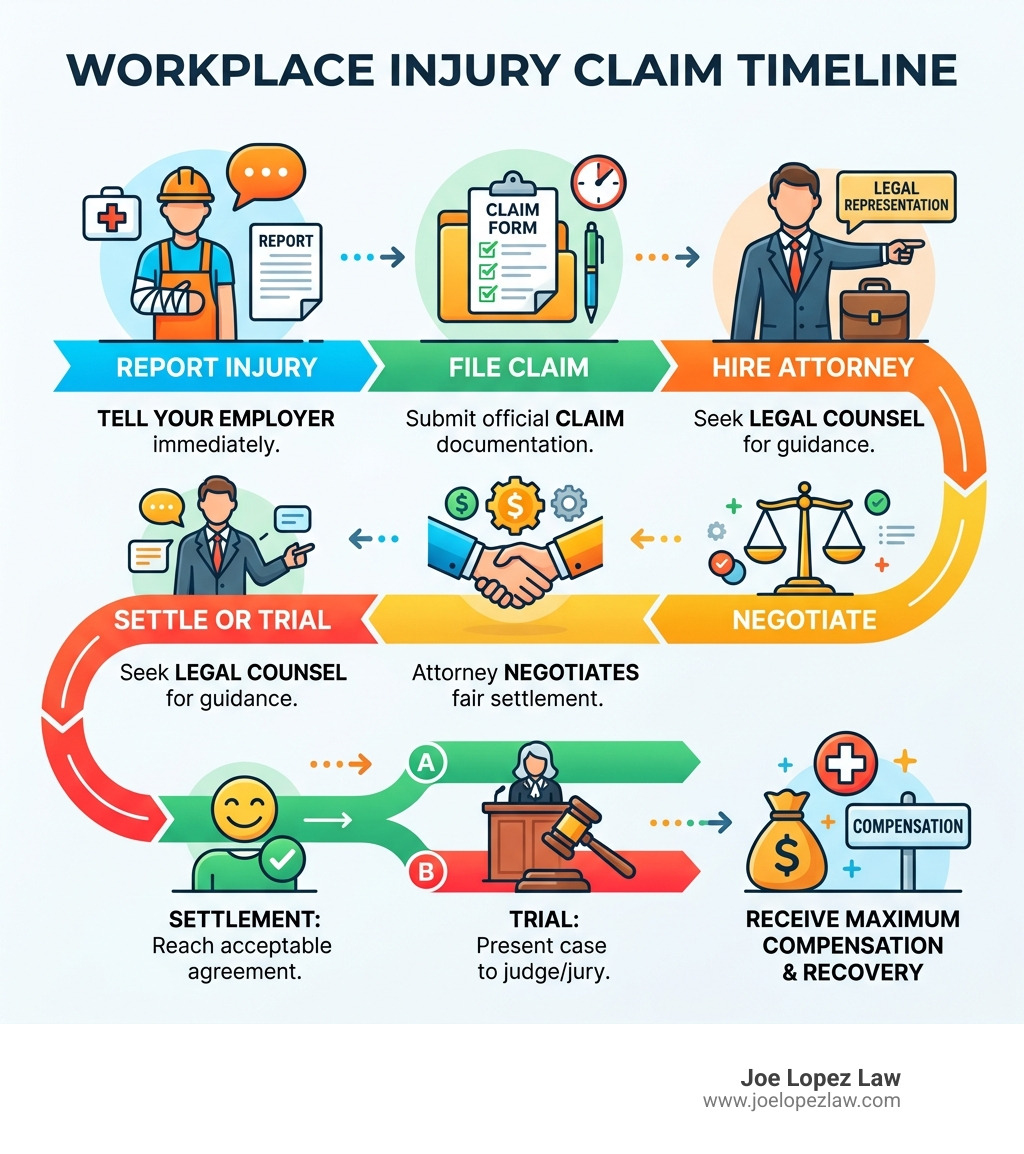
- Report the Injury Immediately: In many jurisdictions, you must notify your employer within 30 days. If you wait, the insurance company will argue that the injury didn’t actually happen at work. Do this in writing.
- Seek Medical Attention: Go to a doctor right away. If your employer has workers’ comp, you may need to see an “authorized” physician. Be honest about your symptoms, but ensure the doctor notes that the injury occurred at work.
- Document Everything: Take photos of the accident scene, the equipment involved, and your injuries. Collect the names and phone numbers of any coworkers who saw what happened.
- Consult Workplace Injury Attorneys: Before you sign any statements for an insurance adjuster or accept a “settlement” check that seems low, talk to a lawyer.
The Appeals Process
If your claim is denied, don’t panic. Denials happen for many reasons—missing a deadline, a dispute over whether the injury was “work-related,” or a claim that you had a pre-existing condition. You have the right to appeal these decisions. This often involves a hearing before an administrative law judge where your attorney can present evidence, medical expert testimony, and witness accounts to overturn the denial.
Frequently Asked Questions about Workplace Injuries
Can I sue my employer if they do not carry workers’ compensation insurance?
Yes. In Texas, if your employer is a “non-subscriber,” they have opted out of the state’s workers’ compensation system. While they may carry a private insurance policy to cover some medical costs, you have the legal right to sue them in civil court if their negligence caused your accident. Unlike workers’ comp, these “non-subscriber claims” allow you to seek full compensation, including pain and suffering and mental anguish. Because the employer has opted out, they also lose certain legal defenses—for example, they usually cannot argue that the accident was “partially your fault” to avoid paying.
What are the common reasons for a workers’ comp claim denial?
Insurance companies are businesses, and they stay profitable by paying out as little as possible. Common reasons for denial include:
- Intoxication: Claims that you were under the influence of drugs or alcohol at the time of the crash.
- Self-Inflicted Injury: Assertions that the injury was intentional.
- Horseplay: If the injury happened while you were “fooling around” rather than working.
- Pre-existing Conditions: The argument that your back pain is from an old high school injury, not the 50-pound box you lifted yesterday. (Note: In many states, you can still get benefits if a work accident aggravates a pre-existing condition).
- Missed Deadlines: Failing to report the injury within the required 30-day window.
How do contingency fees work for injury lawyers?
One of the biggest hurdles for an injured worker is the fear of legal bills. Most workplace injury attorneys work on a contingency fee basis. This means:
- No Upfront Costs: You don’t pay a retainer or hourly fees.
- No Win, No Fee: If the lawyer doesn’t recover money for you, you owe them nothing for their time.
- Percentage-Based: The attorney’s fee is a pre-agreed percentage of the final settlement or court award.
- Free Consultations: You can speak with a lawyer to see if you have a case without spending a dime.
Choosing the Right Workplace Injury Attorney
A workplace injury does more than just hurt your body; it threatens your livelihood and your family’s future. Whether you are dealing with a complex third-party claim or fighting a non-subscriber employer in Austin, you shouldn’t have to navigate the legal minefield alone.
At Joe Lopez Law, we bring over 20 years of trial experience to the table. We’ve seen the tactics insurance companies use to minimize your suffering, and we know how to push back. From construction site injuries to catastrophic falls, our mission is to ensure that the people who build our city are protected when the unthinkable happens.
If you’ve been hurt on the job in Austin, Travis County, or El Paso, contact us today for a free consultation. Let us handle the legal heavy lifting so you can focus on what matters most: your recovery.
Learn more about our construction site injury services and how we can help.