




Article Summary: Riding in a Waymo robotaxi in Austin may feel simple, but the legal reality is not. When there is no human driver, injured passengers may face a shorter evidence window, unclear insurance paths, and a much more technical liability claim.
| Issue | Why It Matters | Critical Austin Evidence | Legal Concern |
|---|---|---|---|
| Waymo Passenger Injury | No human driver, no standard driver insurance claim, and limited passenger control. | Trip records, onboard video, sensor data, app history, and emergency response records. | Corporate Liability & Product Defect Claims. |
| Traditional Rideshare Crash | Human driver conduct remains central to the case. | Driver statements, police reports, app records, photos, and witness testimony. | Negligence & Insurance Coverage Disputes. |
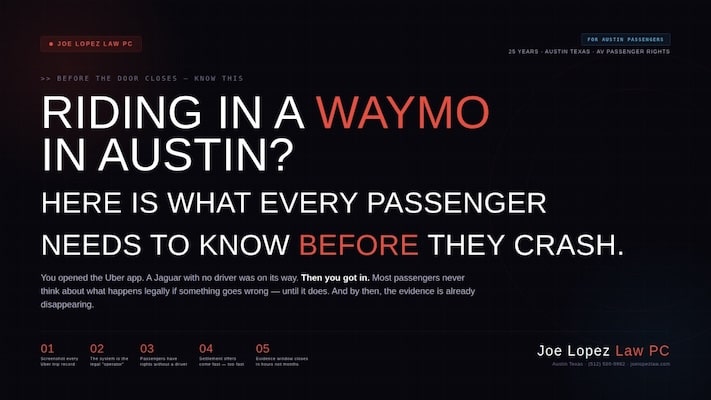
Why Waymo Passenger Injury Claims Are Different
There Is No Human Driver to Hold Accountable
In a traditional Austin car accident, the investigation usually starts with the driver. Were they speeding? Distracted? Impaired? Following too closely? In a Waymo crash, that analysis changes because there is no human driver behind the wheel. The focus shifts to the vehicle’s technology, Waymo’s safety decisions, and whether the autonomous system failed to respond safely to real-world conditions.
The Evidence Window Can Close Quickly
One of the biggest concerns for passengers is how quickly key evidence can become unavailable. A Waymo injury case may depend on app records, trip data, onboard cameras, sensor logs, vehicle diagnostics, and communications between Waymo and emergency responders. Preserving that information early can make the difference between a strong claim and a case built on incomplete evidence.
Passengers May Not Know Who Is Responsible
After a normal rideshare accident, passengers often know to look at the driver, the rideshare company, and the applicable insurance coverage. With a driverless robotaxi, responsibility may involve Waymo, vehicle manufacturers, software systems, maintenance contractors, or other entities connected to the autonomous vehicle’s operation. That is why these cases require more than a standard car accident approach.
What Austin Passengers Should Understand Before Taking a Waymo
1. Document the Trip Immediately
Passengers should save screenshots of the ride, the route, receipts, app details, vehicle information, and any communications from Waymo or Uber after the incident.
2. Get Medical Care Right Away
Even if the injury seems minor at first, medical documentation connects the injury to the incident and helps prevent the company from arguing that the harm came from somewhere else.
3. Contact an Attorney Quickly
Because autonomous vehicle cases can depend on technical evidence, an attorney may need to send preservation demands quickly before critical data is lost, overwritten, or withheld.