


Austin Amazon Delivery Accident Lawyer
Experienced Amazon Delivery Accident Attorneys Serving Austin, TX
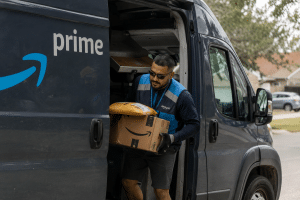 Amazon delivers millions of packages across Austin every week. Behind those deliveries are drivers operating under intense time pressure—many of them classified as independent contractors through Amazon’s Delivery Service Partner (DSP) program or the Flex app. When one of those drivers causes a crash, the liability picture gets complicated fast. Amazon has spent years and millions of dollars building legal structures designed to put distance between the corporation and the drivers it dispatches. That structure doesn’t make your injuries less real. It makes having an experienced attorney more essential.
Joe Lopez Law has been fighting for Austin car accident victims for over 25 years. Amazon delivery accident cases require an attorney who understands commercial fleet liability, independent contractor disputes, and the specific insurance structures Amazon uses to shield itself from claims. If you were hit by an Amazon driver in Austin—whether a DSP vehicle, a Flex driver in a personal car, or an Amazon-branded van—don’t accept any settlement before you know what your case is actually worth.
Key Takeaways
- Amazon delivery drivers in Austin operate through two distinct programs—the Delivery Service Partner (DSP) network and Amazon Flex—and each creates a different liability structure that affects who pays when someone gets hurt.
- Amazon routinely argues that its drivers are independent contractors, not employees, to limit its exposure. Texas courts and federal agencies have increasingly challenged that position, and an experienced attorney can build a case that cuts through it.
- Commercial auto insurance covering Amazon DSP vehicles typically provides far higher coverage limits than personal auto policies—but accessing that coverage requires knowing who to pursue and how.
- Texas’s two-year statute of limitations applies, but the practical window to preserve critical delivery data, route records, and driver logs is much shorter.
- Joe Lopez Law represents drivers, passengers, pedestrians, and cyclists injured in Amazon delivery accidents across Austin—with no fees unless we win.
Amazon Delivery Operations in Austin: What You’re Up Against
Austin is one of Amazon’s highest-volume delivery markets in Texas. The company operates multiple delivery stations in the area, including facilities in Pflugerville, Del Valle, and Round Rock, pushing out thousands of deliveries per day across Travis and Williamson Counties. That volume means Amazon delivery vehicles are on Austin roads constantly—on residential streets in Buda and Cedar Park, on MoPac and I-35, and navigating congested neighborhoods like Mueller, East Austin, and South Congress.
The drivers behind the wheel fall into two main categories. DSP drivers work for small delivery companies that Amazon contracts with—these drivers wear Amazon uniforms, drive Amazon-branded vans, and follow Amazon’s routing and delivery protocols, but they’re technically employed by the DSP company, not Amazon itself. Flex drivers use their own personal vehicles and operate through the Amazon Flex app, earning per-block delivery shifts with even less formal connection to the company.
Both programs put drivers under serious time pressure. Delivery quotas, algorithmic route optimization, and real-time monitoring through Amazon’s Rabbit device create conditions where rushing, distracted driving, and skipped safety checks become the norm—not the exception. Amazon tracks driver speed, stop times, and delivery completion rates. When those pressures lead to a crash, the paper trail exists. Getting it requires knowing what to ask for and moving fast.
Who Can Be Held Liable in an Amazon Delivery Accident?
Establishing liability in an Amazon accident case isn’t always straightforward. Several parties may share responsibility, and identifying the right defendants from the start shapes the entire case.
Amazon Itself
Amazon’s independent contractor defense is legally aggressive but not bulletproof. Courts look past labels at the realities of control: Amazon sets the routes, dictates the uniforms, monitors driver behavior through the Rabbit device, enforces delivery quotas, and can deactivate drivers instantly. That level of operational control—regardless of what the contract says—supports arguments for Amazon’s direct liability under theories of negligence, negligent hiring, negligent supervision, or respondeat superior. The Federal Trade Commission and National Labor Relations Board have both challenged Amazon’s contractor classifications in recent years, and those findings matter in civil litigation.
The Delivery Service Partner Company
DSP companies are the small businesses Amazon contracts with to operate delivery routes. They hire drivers, maintain vehicles, and carry their own commercial insurance. If the DSP failed to properly screen a driver, allowed a vehicle with known mechanical problems on the road, or pressured drivers to violate traffic laws to meet quotas, the DSP may bear direct liability for what happened. These are separate defendants from Amazon, with separate insurance coverage.
The Individual Driver
Even where Amazon and the DSP limit their exposure, the driver who caused the crash can be sued individually. If the driver was speeding, running stop signs to meet delivery quotas, texting while driving, or operating without adequate sleep, their personal negligence is the foundation of the claim. In practice, the driver’s personal auto insurance rarely covers commercial delivery activity—which is exactly why pursuing Amazon and the DSP matters so much.
Vehicle Manufacturers
If a mechanical failure contributed to the crash—defective brakes, a tire blowout from a known defect, or a vehicle safety system that failed—the vehicle manufacturer may share liability under Texas products liability law. Amazon’s fleet of delivery vehicles, including Mercedes-Benz Sprinters and Rivian electric vans, are commercial products subject to the same defect analysis as any other vehicle.
What Makes Amazon Accident Cases Different from Ordinary Car Accidents
In a typical Austin car accident, you deal with one driver and one insurance company. Amazon delivery accidents can involve three or more defendants, multiple insurance carriers, and a corporation that has spent years engineering its legal structure to minimize payouts. A few things set these cases apart:
- Amazon’s internal delivery data—route logs, GPS tracking, delivery scan records, Rabbit device data—documents exactly where the driver was, how fast they were going, and how many stops they had left. Amazon controls all of it and will not produce it voluntarily.
- Amazon and its DSP partners carry commercial auto policies with coverage limits far above a personal auto policy. But those carriers will fight hard to minimize what they pay out.
- The independent contractor defense is legally contested but practically powerful. Without an attorney who knows how to dismantle it, victims can end up dealing with a driver’s personal auto insurer—which may disclaim coverage entirely for commercial delivery activity.
- Multiple parties means multiple defense teams, each trying to shift fault to the others. An experienced plaintiff’s attorney anticipates that tactic and builds a case that holds all of them accountable.
That evidence advantage cuts both ways. If Amazon’s own data shows the driver was speeding, behind on their route, or operating unsafely, it can be devastating to their defense. But Amazon controls that data, and it will not hand it over voluntarily. Getting it requires fast legal action—a formal evidence preservation demand sent before retention windows close.
What to Do After an Amazon Delivery Accident in Austin
What you do in the hours and days after an Amazon delivery crash directly affects the strength of your case.
- Call 911 and make sure a police report is filed. The report should identify the Amazon vehicle and note any identifying information—vehicle number, DSP company name on the van, or the driver’s delivery bag or uniform. This documentation matters.
- Seek medical attention immediately. Even if you feel fine at the scene, get evaluated. Injuries from delivery vehicle crashes—particularly those involving large vans—can include spinal trauma, broken bones, and head injuries that don’t fully present at the scene. A gap in medical care gives the defense an opening to argue your injuries weren’t serious.
- Photograph everything before you leave the scene. The Amazon van, its license plate, any company branding on the vehicle, the crash site, road conditions, traffic signals, and your own injuries. If the driver’s Rabbit device is visible inside the van, photograph that too.
- Get witness information. Residential delivery routes mean neighbors often see these crashes. Get names and phone numbers before people walk away.
- Document your Amazon delivery history if relevant. If you received a delivery that day or were near an active delivery stop, your own Amazon account may contain records that help establish the driver’s route and timing.
- Do not speak to Amazon’s insurance representatives without an attorney. Amazon’s commercial carriers have experienced claims adjusters whose job is to settle fast and cheap—before you understand the extent of your injuries or the full value of your claim. Anything you say can and will be used to minimize your payout.
- Contact an Austin Amazon accident attorney as soon as possible. Amazon’s delivery data has limited retention windows. The sooner a preservation demand goes out, the more complete the evidence picture.
Texas Law and Commercial Delivery Accidents
Texas follows a proportionate responsibility system under Civil Practice and Remedies Code § 33.001. Fault is allocated among all responsible parties—Amazon, the DSP, the driver, and any other contributors—and you can recover as long as you’re found 50% or less responsible for the accident. That system creates incentives for each defendant to shift blame to the others, which is why building an airtight liability case from the start matters.
Texas also recognizes the borrowed servant doctrine and the right to control test, both of which apply directly to Amazon’s relationship with its DSP drivers. Courts examine not just what the contract says, but how much practical control Amazon exercises over the driver’s work. Given Amazon’s extensive monitoring, quota enforcement, and route control, that analysis often favors the plaintiff’s theory that Amazon bears responsibility for the driver’s conduct.
The statute of limitations for personal injury claims in Texas is two years from the date of the accident. Wrongful death claims carry the same deadline. But the practical window to secure delivery logs, GPS data, and driver records is weeks, not years. A formal evidence preservation demand needs to go out immediately.
What Compensation Can You Recover?
A successful Amazon delivery accident claim in Texas can cover:
- Medical expenses: Emergency treatment, hospitalization, surgery, physical therapy, specialist care, and projected future medical costs for long-term injuries
- Lost wages: Income lost during recovery, and diminished earning capacity if your injuries affect your ability to work going forward
- Pain and suffering: The physical pain, emotional distress, and disruption to daily life caused by the crash and recovery
- Property damage: Repair or replacement of your vehicle
- Wrongful death damages: For families who have lost someone, compensation for funeral expenses, loss of financial support, loss of companionship, and mental anguish
In cases where Amazon or its DSP’s conduct rises to the level of gross negligence—conscious indifference to an unreasonable risk of harm—punitive damages may also be on the table. Amazon’s documented history of pressuring drivers on tight delivery timelines, combined with patterns of crashes attributable to those conditions, is the kind of evidence that supports that argument.
Why Choose Joe Lopez Law for Your Amazon Accident Case?
Joe Lopez has spent over 25 years taking on corporations, trucking companies, insurance carriers, and commercial fleet operators that tried to shortchange people who deserved better. Amazon is a powerful opponent with deep resources and experienced outside counsel. The approach here is the same as it’s always been: investigate thoroughly, build an airtight case, and fight until the client gets what they’re owed.
Joe is licensed by the Texas State Bar, earned his J.D. from St. Mary’s University School of Law in San Antonio, and is a member of the Multi-Million Dollar Advocates Forum, the National Trial Lawyers Top 100, and has been recognized as a Texas Super Lawyer. He handles cases personally—you won’t be handed off to a paralegal or a case manager. You’ll work directly with Joe from the first call through resolution.
Joe also speaks Spanish fluently. If English isn’t your first language, that barrier disappears.
The firm has recovered over $100 million for clients across Central Texas. Those results come from being willing to go to trial when the offer isn’t fair—and insurance companies know it.
Frequently Asked Questions About Amazon Delivery Accidents in Austin
Can I sue Amazon if one of their delivery drivers hit me in Austin?
Yes, in many cases. While Amazon classifies its DSP drivers as independent contractors rather than employees, courts examine the degree of actual control Amazon exercises over those drivers. Given that Amazon controls routes, monitors driver behavior through its Rabbit device, enforces delivery quotas, and can deactivate drivers at will, arguments for Amazon's direct liability are often strong. An experienced attorney will evaluate all potential defendants—Amazon, the DSP company, and the driver—and pursue the ones that best support your claim.
What is the difference between an Amazon DSP driver and an Amazon Flex driver?
DSP drivers work for small delivery companies (Delivery Service Partners) that contract with Amazon. They typically drive Amazon-branded vans and follow Amazon's routing protocols. Flex drivers are individuals who use their own personal vehicles to make deliveries through the Amazon Flex app. The liability structure differs: DSP crashes typically involve the DSP company's commercial auto insurance, while Flex crashes often involve questions about whether the driver's personal auto policy covers commercial delivery activity—which most standard policies exclude.
What if an Amazon Flex driver hit me in their personal car?
Amazon Flex drivers carry their own personal auto insurance, but most personal policies exclude commercial delivery activity. Amazon carries contingent commercial auto coverage that may apply when a Flex driver is actively making deliveries, but accessing it requires documentation of the driver's status at the time of the crash. This is one reason why preserving Amazon's delivery records and the driver's app activity is critical in the immediate aftermath of a Flex accident.
Learn more about what to do if an Amazon Flex driver hits you with their personal vehicle.
How long do I have to file a claim after an Amazon delivery accident in Texas?
Texas law gives you two years from the date of the accident to file a personal injury lawsuit. Wrongful death claims carry the same two-year deadline. That window sounds long, but Amazon's internal delivery data—GPS logs, route records, driver monitoring data—has limited retention periods that can run out in weeks. Contact an attorney as soon as possible to ensure a preservation demand goes out before that evidence disappears.
What evidence is most important in an Amazon delivery accident case?
Amazon's internal delivery data is the most powerful evidence: GPS route logs, delivery scan records, Rabbit device data showing speed and driver behavior, and communications between the driver and dispatch. Beyond that, you need the police report, photographs from the scene, medical records, witness statements, and any surveillance footage from nearby businesses or residences. Your attorney should send a formal evidence preservation demand to Amazon and the DSP immediately after you retain them.
Learn more about what items you should keep for evidence purposes.
Does Amazon's insurance cover accidents caused by their drivers?
It depends on the program and the driver's status at the time of the crash. DSP drivers are typically covered under the DSP company's commercial auto policy, which Amazon requires to carry minimum coverage limits. Amazon also maintains its own commercial umbrella coverage. For Flex drivers in personal vehicles, coverage depends on whether Amazon's contingent commercial policy is triggered and whether the driver's personal insurer disclaims coverage. Navigating these overlapping policies is one of the most complex aspects of Amazon accident claims and one of the strongest reasons to have an attorney involved from the start.
Learn which insurance may cover your injuries, how coverage gaps arise, and what evidence you need.
What if the Amazon driver claims I was partially at fault?
Texas's proportionate responsibility law allows you to recover damages as long as you are found 50% or less responsible for the accident. Even if the defense argues you contributed to the crash, an experienced attorney can work to minimize your assigned percentage and maximize your recovery. The key is having strong evidence—police reports, witness accounts, surveillance footage, and Amazon's own delivery data—that tells a clear and accurate story of what happened.
Can a pedestrian or cyclist hit by an Amazon delivery van file a claim?
Absolutely. Pedestrians, cyclists, and anyone else injured by an Amazon delivery vehicle has the same right to pursue a claim as a driver. The duty of care Amazon and its drivers owe extends to everyone sharing Austin's roads and sidewalks. If you were struck while crossing the street, riding your bike, or walking near a delivery stop, your medical bills, lost wages, pain and suffering, and other damages are fully recoverable.
How much is an Amazon delivery accident case worth?
Every case is different, and no attorney can promise a specific outcome. What drives the value of an Amazon accident claim is the severity of your injuries, the clarity of fault, the defendants' available insurance coverage, and the strength of the evidence. Cases involving serious injuries, clear negligence, and multiple well-insured defendants—which describes many Amazon delivery crashes—often result in substantially higher recoveries than standard car accident claims. The free consultation at Joe Lopez Law is a good starting point for understanding what your case may be worth.
How much does it cost to hire Joe Lopez Law for an Amazon accident case?
Nothing upfront. Joe Lopez Law works on a contingency fee basis—no attorney's fees, no case expenses unless we win. Given the complexity of Amazon delivery accident claims and the resources Amazon brings to its defense, having experienced representation from the very beginning is essential. Call us for a free consultation and let us evaluate your case at no cost.
Talk to an Austin Amazon Accident Attorney Today
Amazon delivery accident cases move fast because evidence disappears fast. If you were hurt by an Amazon delivery driver in Austin—as a driver, passenger, pedestrian, or cyclist—contact Joe Lopez Law now. The consultation is free. We advance all case expenses. You pay nothing unless we win.
Joe Lopez Law — (512) 580-9962 1502 West Ave., Austin, TX 78701