




Short answer: Sort of, but not the way most people think. Texas has no dog bite statute, and there is no rule that gives every dog a “free” first bite. Texas courts use two separate paths to hold a dog owner responsible. Under the first, an owner who knew or should have known the dog was dangerous is strictly liable for the bite. Under the second, any owner who failed to use reasonable care to control the dog can be liable for negligence, even if the dog had never bitten anyone before.
That second path is the one the “one-bite” myth leaves out. It’s also the path that wins many Austin dog bite cases, because the city’s leash and restraint rules give owners a clear standard of care to follow.
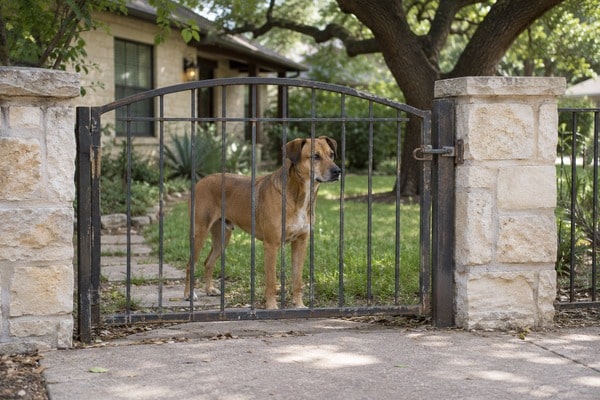
This guide explains how each theory works, who besides the owner can be held responsible, and what to do in the first days after a dog bite in Austin.
What Austin Dog Bite Victims Should Know
- Texas dog bite law comes from court decisions, not a statute. The leading case is the Texas Supreme Court’s 1974 decision in Marshall v. Ranne.
- An owner who knew or should have known the dog had dangerous tendencies is strictly liable, even if they took precautions.
- An owner can also be liable for negligence if they failed to reasonably control the dog, regardless of the dog’s history.
- Austin requires dogs to be restrained in public except in designated off-leash areas. A violation can support a negligence claim.
- Landlords can be liable for a tenant’s dog only in narrow circumstances, usually when they actually knew the dog was dangerous.
- Most Texas dog bite claims must be filed within two years of the bite.
Is Texas a One-Bite State?
Texas is often called a “one-bite” state, but the label is misleading. In true strict liability states, a dog owner is responsible for almost any bite, period. Texas doesn’t work that way. The state also doesn’t hand owners a free pass for a first bite.
The rules come from Marshall v. Ranne, a 1974 Texas Supreme Court case that, oddly enough, involved a hog rather than a dog. The court adopted the strict liability rule for domestic animals with known dangerous tendencies. It also confirmed that the owner of an animal that isn’t known to be dangerous can still be liable for negligent handling of that animal.
Texas courts still apply that two-track framework to dog bite cases today. Which track fits your case depends on what the owner knew and what they did.
Strict Liability: When the Owner Knew the Dog Was Dangerous
Strict liability is the “one-bite” part of Texas law. To win this kind of claim, you have to show three things:
- The defendant owned or possessed the dog.
- The dog had dangerous tendencies that are abnormal for dogs.
- The owner knew or had reason to know about those tendencies.
If those elements are met, the owner is responsible for the injuries the dog causes. It doesn’t matter how careful they were. A tall fence, a “Beware of Dog” sign, or a strong leash won’t get them off the hook.
What counts as a “dangerous tendency”?
A prior bite is the clearest example, but it isn’t the only one. Evidence that a dog lunged at people, chased joggers, attacked other dogs, or had to be pulled off someone can show the owner was on notice. So can complaints from neighbors, prior calls to animal control, or an owner’s own statements, like telling a delivery driver to stay back because the dog “doesn’t like strangers.”
Records matter here. Prior bite reports, 311 complaints, and quarantine files often hold the history an owner would rather keep quiet. Texas also has a formal process for declaring a dog “dangerous” under Chapter 822 of the Texas Health and Safety Code. Once an owner learns their dog has been declared dangerous, they have to register it, keep it restrained or in a secure enclosure, and carry liability insurance. An owner who ignores those requirements has a hard time arguing they didn’t know the dog was a risk.
Negligence: When the Dog Had No History
This is where the “one-bite” myth falls apart. Even if a dog has never bitten anyone, the owner can still be liable if they failed to use reasonable care to keep the dog under control and that failure caused your injury.
A negligence claim doesn’t require proof that the dog was vicious. It requires proof that the owner acted carelessly. Common examples include:
- Letting a dog roam the neighborhood off-leash
- Leaving a gate open or ignoring a broken fence
- Handing a large, strong dog to a child or someone who can’t physically control it
- Bringing a dog into a crowded setting where it’s likely to be stressed or startled
Negligence claims do carry one risk that strict liability claims don’t. Texas follows a modified comparative fault rule, so the owner can argue you were partly to blame. Your recovery is reduced by your share of fault, and you can’t recover anything if you’re found more than 50 percent responsible.
How Austin’s leash law fits in
Austin City Code requires owners and handlers to keep dogs under restraint, and a person walking a dog on a leash must keep it under control at all times. The exceptions are the city’s designated off-leash areas, such as parts of Zilker Park, Auditorium Shores, and Red Bud Isle.
That rule matters in a negligence case. If a dog was running loose on a South Austin street or pulled free from an owner who couldn’t hold it, the owner broke a safety rule written specifically to prevent attacks like the one that hurt you. That’s strong evidence the owner didn’t act with reasonable care.
Who Else Can Be Liable for a Dog Bite in Austin?
The owner isn’t the only possible defendant. Texas law looks at who possessed or controlled the dog, not just whose name is on the adoption papers.
Dog sitters, walkers, and other keepers
A person who was handling the dog when it attacked can be responsible, even if they didn’t own it. That includes professional dog walkers, boarding facilities, daycare operators, and friends watching the dog for the weekend. If the keeper was careless, or knew the dog was aggressive, they may share liability with the owner.
Landlords and property managers
Austin has a huge rental market, so this question comes up often. Texas courts set a high bar for holding a landlord responsible for a tenant’s dog. In Batra v. Clark, a Houston appeals court held that a landlord who isn’t living on the property can be liable only if they actually knew the dog was there, actually knew it was dangerous, and had the ability to control the situation.
Common areas can change the picture. When a bite happens in an apartment complex’s parking lot, courtyard, or hallway, courts have looked at whether the property owner controlled that area and knew about the particular dog’s aggression. Prior tenant complaints sent to management can be the key evidence.
Businesses
Stores, breweries, and patios across Austin welcome dogs. A business that lets a visibly aggressive dog stay on its premises, or keeps its own guard dog without proper controls, can face a premises liability claim.
What to Do After a Dog Bite in Austin
The first few days shape both your health and your claim. Here’s what matters most.
- Get medical care right away. Dog bites carry a high infection risk, and puncture wounds can look minor while damaging tissue, tendons, or nerves underneath. Bites to the face and hands often need specialist care.
- Report the bite. In Austin, call 311 so Animal Protection can open a bite investigation. The report creates an official record and starts the rabies observation process.
- Identify the dog and the owner. Get the owner’s name, address, and phone number, and ask for the dog’s rabies vaccination information. If the owner isn’t present, note where the dog came from.
- Photograph everything. Take photos of your wounds as soon as possible and again as they heal. Photograph the location, any open gate or broken fence, and torn or bloody clothing.
- Talk to witnesses. Neighbors may know whether the dog has attacked or threatened anyone before. That history can turn a negligence case into a strict liability case.
- Be careful with insurance adjusters. Most dog bite claims are paid through the owner’s homeowner’s or renter’s insurance. The adjuster’s job is to limit what the company pays, so it’s wise to speak with a lawyer before giving a recorded statement.
What happens to the dog?
Under Austin Animal Services rules, a dog reported for biting someone must be observed for 10 full days from the date of the bite, whether or not it’s vaccinated. The observation can happen at the shelter, at a veterinary clinic, or in some cases at home. The goal is rabies control, not punishment. A report doesn’t automatically mean the dog will be taken away.
Many victims hesitate to report a neighbor’s or friend’s dog for exactly that reason. Reporting still matters. It protects your health, and the records it creates can make or break your claim later.
What Compensation Can You Recover After a Dog Bite?
A successful claim can cover your financial losses and the personal toll of the attack. That can include:
- Emergency care, surgery, and follow-up treatment
- Future medical costs, including scar revision or reconstructive surgery
- Lost wages and reduced earning capacity
- Pain, suffering, and mental anguish
- Disfigurement and physical impairment
Disfigurement damages deserve special attention. Dog bites often leave permanent scars on the face, arms, and hands. Children are bitten at especially high rates and are more likely to suffer facial injuries. A fair settlement accounts for how those scars will affect the person for decades, not just the cost of the ER visit.
How Long Do You Have to File a Dog Bite Claim in Texas?
Most dog bite claims in Texas have a two-year statute of limitations, which starts on the date of the bite. For children, the deadline is paused until the child turns 18. Waiting is still risky. Witnesses move, owners rehome dogs, and records get harder to find with time.
How an Austin Dog Bite Lawyer Builds Your Case
Dog bite cases are won or lost on evidence about the dog and the owner. Joe Lopez Law pulls Animal Protection files, 311 complaint histories, prior bite reports, and quarantine records to find out what the owner knew. We talk to neighbors and witnesses, review the owner’s insurance coverage, and identify everyone who may share responsibility, from a dog sitter to a property manager who ignored complaints.
We also work with medical providers to document the full cost of your injuries, including future scar treatment and the emotional impact of the attack. That record matters when the insurance company argues your bite was “minor” or that you provoked the dog.
Learn more about how we handle these cases on our Austin dog bite lawyer page.
Why Dog Bite Victims Choose Joe Lopez Law
Joe Lopez has represented injured Texans since 2003, and his firm has recovered more than $100 million for clients. He is a Texas Super Lawyer, a member of the National Trial Lawyers Top 100, and a Lifetime Member of the Multi-Million Dollar Advocates Forum.
Joe Lopez Law takes fewer cases on purpose, so you work directly with Joe rather than being passed between case managers. He is fluent in English and Spanish, and Spanish-speaking clients can talk through their case without an interpreter. Past results do not guarantee a similar outcome in your case.
Talk to an Austin Dog Bite Attorney
If you were bitten by a dog in Austin, the owner’s insurance company is already deciding what your claim is worth. Contact Joe Lopez Law for a free consultation. We’ll explain which theory fits your case, who may be responsible, and what your claim could be worth. Se habla español.
Call (512) 580-9962 to discuss your case.
This article is for informational purposes only and does not constitute legal advice. Reading it does not create an attorney-client relationship. For advice about your situation, consult a licensed Texas attorney.