




If you were struck and injured by an Amazon delivery vehicle in Austin or anywhere in Central Texas, your life may have been flipped upside down in a fraction of a second. Between mounting emergency room bills at Dell Seton Medical Center, missed paychecks from missing work, and the frustration of dealing with corporate insurance adjusters, one of the most urgent questions on your mind is simple: How much is my Amazon delivery accident claim actually worth?
The short answer is that there is no fixed dollar amount or universal calculator for an Amazon crash claim. Compensation in Texas varies widely depending on the severity of your injuries, your total financial losses, and—most importantly—how liability is structured between Amazon, its independent delivery contractors, and their insurance carriers.
Understanding the true value of your claim requires looking at the specific damages allowed under Texas personal injury law and navigating the complex legal maze Amazon uses to shield itself from corporate liability.
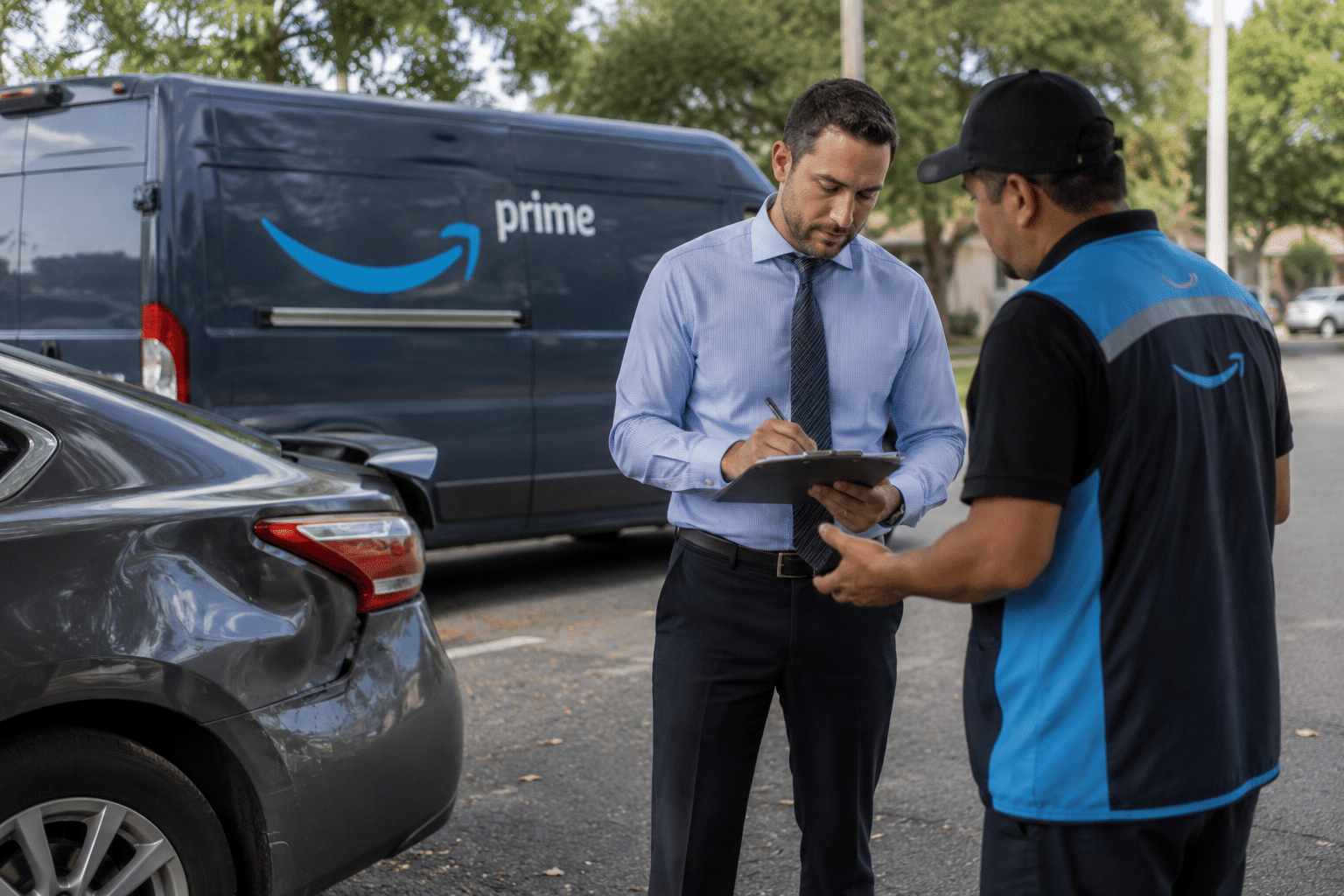
Key Factors That Determine the Value of an Amazon Accident Claim
When evaluating the financial value of a personal injury case involving an Amazon van, Flex driver, or heavy delivery vehicle, several primary categories of damages dictate the eventual settlement or jury verdict.
1. Medical Expenses (Past and Future)
Your medical bills form the foundation of your economic damages. In Texas, you are entitled to seek compensation for all reasonable and necessary medical care related to the crash, including:
- Ambulance transportation and emergency department treatment
- Surgical procedures, hospital stays, and specialist consultations
- Diagnostic imaging like X-rays, CT scans, and high-resolution MRIs
- Physical therapy, neurological rehabilitation, and prescription medications
- Future medical care if your injuries cause long-term disability, chronic pain, or require ongoing interventions
Texas Legal Context: Under Texas Civil Practice and Remedies Code § 41.0105, recovery of medical expenses is limited to the amount actually paid or incurred by or on behalf of the claimant. Accurately documenting both current paid amounts and future projected medical expenses with qualified specialists is essential to securing full value.
2. Lost Wages and Lost Earning Capacity
If your injuries kept you out of work, you can claim every dollar of lost income, including used paid time off (PTO), missed performance bonuses, and lost overtime opportunities. If your collision resulted in permanent impairment or a traumatic brain injury (TBI) that prevents you from returning to your previous career, you can claim loss of future earning capacity. Proving this loss often requires economic experts and vocational specialists to demonstrate how your career trajectory was altered.
3. Non-Economic Damages (Pain and Suffering)
Texas law allows injured victims to recover non-economic damages to account for the physical and emotional toll of a collision. These include:
- Physical pain and suffering (both past and future)
- Mental anguish and trauma (such as post-accident anxiety or driving PTSD)
- Physical impairment, loss of mobility, or permanent disfigurement
- Loss of enjoyment of life and inability to participate in family activities or personal hobbies
Because non-economic damages do not come with an itemized invoice, corporate insurance carriers routinely try to minimize them. Strong evidence—such as detailed medical records, personal injury journals, and testimony from family members—is required to establish the true human cost of your injuries.
Why Amazon Delivery Cases Are More Complex Than Standard Car Crashes
Calculating damages is only half of the equation. To actually recover the full value of your case, your legal team must overcome the intricate legal barriers created by Amazon’s delivery infrastructure.
The Delivery Service Partner (DSP) Loophole
Amazon rarely employs its drivers directly. Instead, the company routes the vast majority of its package deliveries through third-party logistics companies known as Delivery Service Partners (DSPs), or through individual gig workers using their personal vehicles (Amazon Flex drivers).
When a DSP driver causes a serious wreck in Travis County, Amazon often denies direct responsibility, claiming the driver was an employee of an independent business. DSPs are typically required to carry commercial auto liability policies with substantial coverage limits (often up to $1,000,000). However, when severe injuries occur—such as spinal cord trauma, severe fractures, or catastrophic brain injuries—that primary policy limit can quickly be exhausted by medical costs alone.
Pursuing Amazon Directly for Full Compensation
To recover maximum compensation in catastrophic cases, an attorney must look beyond the contractor’s initial policy limits. This involves investigating whether Amazon exerted direct control over the driver’s daily operations, scheduling, and safety standards, or whether Amazon itself was negligent in hiring and monitoring the DSP.
Uncovering internal data—such as telematics, route schedules, driver monitoring app logs, and dash cam footage—is critical to establishing full liability against all responsible parties. You can learn more about official traffic crash reporting and commercial vehicle safety guidelines through the Texas Department of Transportation.
What Steps Should You Take to Protect Your Case Value?
To ensure your claim reflects the full extent of your damages, take immediate action following a collision:
- Seek Immediate and Continuous Medical Care: Do not skip appointments or delay treatment. Gaps in care give insurance adjusters an excuse to argue your injuries were not serious or were caused by something else.
- Report the Accident Promptly: Ensure law enforcement generates an official crash report detailing the scene, statements, and commercial vehicle details.
- Avoid Giving Recorded Statements: Corporate insurance adjusters work to protect their company’s bottom line. Do not agree to a recorded statement or sign any medical releases without legal representation.
- Preserve All Evidence: Keep copies of medical bills, discharge paperwork, proof of missed work, and photos of your injuries and vehicle damage.
Taking on a multi-billion-dollar corporation and its network of insurance carriers requires a law firm with deep resources, proven trial experience, and an unwavering commitment to standing up for injured individuals.
At Joe Lopez Law, we have been fighting for injured Texans across Austin and Central Texas since 2003. We intentionally limit our caseload so that every client works directly with their trial attorney from day one. Having recovered over $100 million for our clients—including a $1.25 million settlement against a major online retailer after the delivery contractor’s policy was exhausted—we know how to hold corporate giants accountable.
If you or a family member was injured by a delivery driver, do not settle for less than your case is worth. Speak directly with a dedicated Austin Amazon Accident Attorney at Joe Lopez Law to evaluate your claim and learn about your legal options. Contact us today at (512) 580-9962 for a free, confidential consultation in English or Spanish.