




What are the different types of records that track car accidents?

When a car accident occurs, it generates a trail of records across various systems. Understanding these record types is crucial because each serves a unique purpose and has its own retention period. For drivers in Austin, Travis County, and El Paso, knowing these distinctions clarifies how long an incident might impact driving privileges and insurance premiums.
What is a Motor Vehicle Record (MVR) or Driving Record?
Your Motor Vehicle Record (MVR) is an official document maintained by the Texas Department of Public Safety (DPS). This record tracks your driving history, including:
- Traffic violations (speeding, running stop signs)
- At-fault accidents
- License suspensions or revocations
- DUI convictions
Insurance companies access MVRs to assess risk, while employers use them for background checks. In Texas, a standard Type 3A MVR typically shows your driving history for the past three years. Serious infractions can remain visible for longer.
What are Insurance Records and CLUE Reports?
Separate from state records are insurance records, specifically the Comprehensive Loss Underwriting Exchange (CLUE) report. Maintained by LexisNexis, this report tracks your insurance claims history.
Unlike an MVR, a CLUE report tracks any claim filed, regardless of fault, including:
- Car accident claims (at-fault and not-at-fault)
- Damage types and payout amounts
- Inquiries about potential claims
Insurers use CLUE reports to predict future risk. These reports typically retain information for up to seven years, often longer than the DPS maintains an MVR. For financial details following a crash, see our guide on how long car accident settlements take in Texas.
What are Legal and Court Records?
Accidents involving criminal charges or lawsuits generate public legal records with potentially indefinite retention.
- Criminal Convictions: DUI or reckless driving convictions become part of your permanent criminal record and rarely fall off like MVR entries.
- Civil Judgments: If you are sued and a court issues a judgment, it can impact your credit and financial standing for years.
Understanding these timelines is vital. While MVRs have defined limits, legal records can affect employment and housing for a lifetime. Explore how long you have to file a car accident lawsuit in Texas for more on legal timelines.
How long do car accidents typically stay on your driving and insurance records?
The duration an accident stays on your record depends on the record type, state laws, and incident severity. While national averages exist, Texas drivers must follow specific state timelines.

How long do accidents stay on your DMV/MVR?
Nationally, accidents remain on an MVR for 3 to 10 years. In Texas, most standard accidents stay on your driving record for three years. This is the primary window employers and insurers review.
However, serious violations carry a longer footprint:
- Serious Violations: DUIs, hit-and-runs, or accidents involving fatalities can stay on a Texas record for five years or more.
- Commercial Driver’s Licenses (CDL): Federal regulations mandate stricter reporting and longer retention for CDL holders.
While states like California or New York have varying rules, Texas DPS generally adheres to the three-year window for minor incidents. For a broader perspective, see this guide on how long an accident stays on your record.
How long do insurance companies consider accidents?
Insurers use their own look-back periods to calculate premiums:
- Typical Look-Back: Most insurers consider accident history for three to five years.
- CLUE Reports: These reports retain data for seven years, allowing insurers to see claims even after they fall off your MVR.
- Company Variations: Some providers are more forgiving after three years, while others factor in the full seven-year history.
How long do points from accident-related violations stay on your record?
Texas repealed its Driver Responsibility Program (DRP) in 2019, so it no longer uses a traditional point system for surcharges. However, violations still result in:
- Fines and Penalties: Direct costs for the infraction.
- License Suspension: Possible for repeated or serious offenses.
- Insurance Impact: Violations remain on your record for at least three years, directly affecting premium calculations.
Do factors like fault, severity, or type of accident change how long it stays on record?
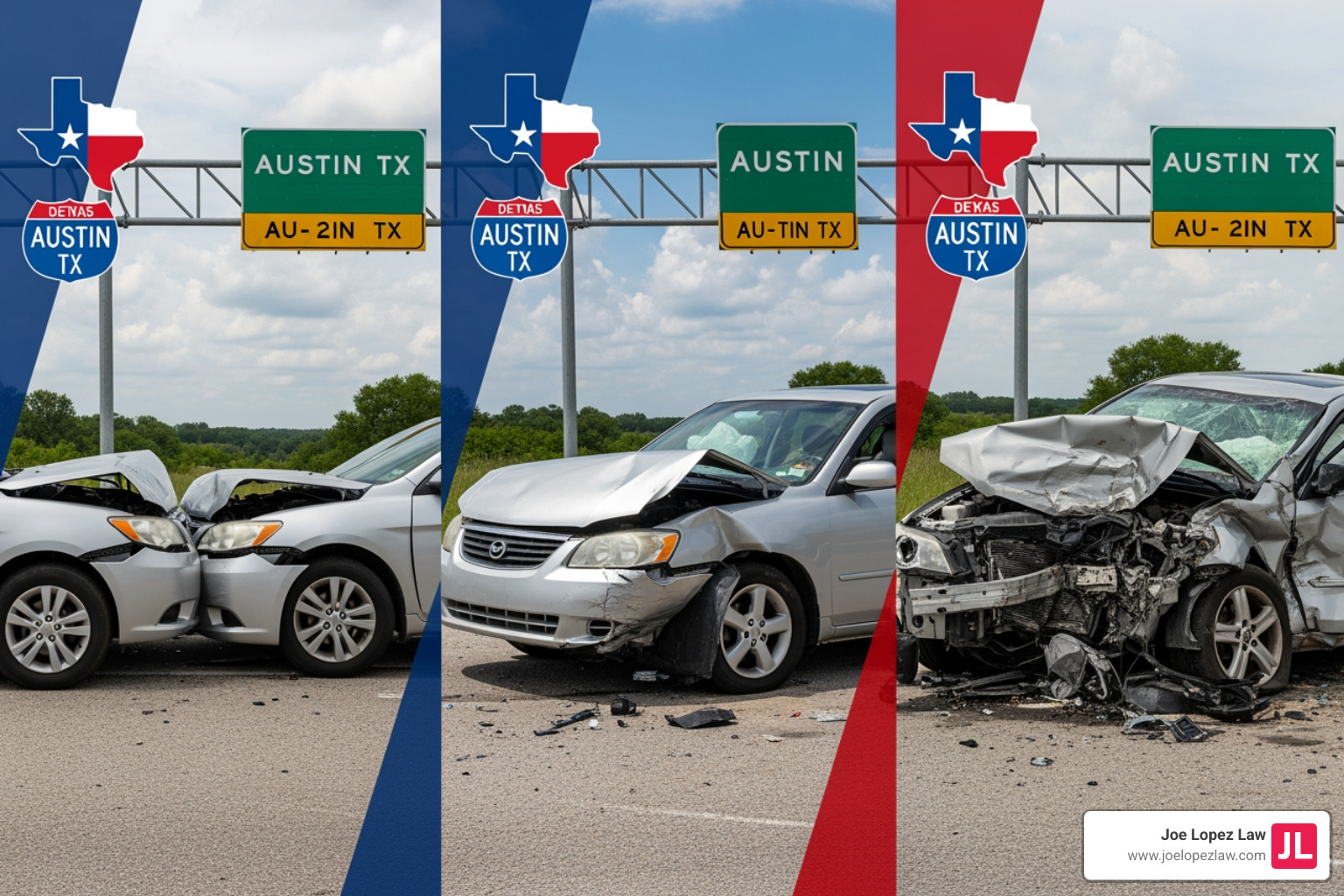
Fault, severity, and the nature of the violation significantly influence how long an accident impacts your record.
Does fault affect record retention?
Texas is a “fault-based” state. The driver responsible for the crash is liable for damages, which affects record longevity.
- At-Fault Accidents: These have the most significant impact on insurance rates, often persisting for three to five years (or seven years on CLUE reports).
- Not-At-Fault Accidents: These appear as “reported accidents.” While Texas doesn’t prohibit rate increases for not-at-fault claims, many insurers won’t penalize you unless they perceive an overall increase in risk.
- Partial Responsibility: Under Texas’s “modified comparative negligence” rule, if you are 51% or more at fault, you cannot recover damages. Even partial fault can make an accident “chargeable” by your insurer.
How does accident severity impact record retention?
| Factor | What to Look For |
|---|---|
| Minor Fender-Benders | Typically 3 years on MVR; 3-5 years for insurance impact. |
| Injury or Major Damage | Often tracked for 5-7 years by insurers due to higher payouts. |
| DUI or Fatalities | Can remain on MVR for 5+ years and permanently on criminal records. |
Reportable vs. Non-Reportable Accidents
In Texas, an accident is reportable to the DPS if it involves injury, death, or property damage exceeding $1,000. If these criteria are met, a CR-3 crash report is filed. Minor scrapes below this threshold might not appear on your MVR, but if an insurance claim is filed, it will appear on your CLUE report. For more on legal definitions, read what is considered a car accident.
Can you remove an accident from your record early, and how can you mitigate its impact?
While you generally cannot erase a legitimate accident from your Texas MVR, you can take steps to mitigate its effects.
Can you remove an accident from your record early?
Accidents accurately reported to the DPS stay for the designated retention period. However, corrections are possible if:
- Logged in Error: If an accident was mistakenly attributed to you, you can petition the Texas DPS for a correction with evidence.
- Fault Incorrectly Determined: Challenging a police report’s fault determination with witness statements or dashcam footage can change how insurers view the incident.
- Charges Dismissed: If a related citation is dismissed, you may have that specific violation removed, though the accident entry might remain.
How can defensive driving courses help?
Completing an approved defensive driving course in Texas offers two main benefits:
- Violation Dismissal: It can sometimes lead to the dismissal of a minor traffic ticket, keeping the violation off your record.
- Insurance Discounts: Many insurers offer discounts for completing these courses, helping offset premium hikes.
What is accident forgiveness?
Some insurers offer accident forgiveness to prevent rate hikes after your first at-fault accident. You usually need a clean record for three to five years to qualify. This does not remove the accident from your MVR or CLUE report; it only prevents a premium increase with that specific carrier.
Other mitigation strategies
- Maintain Safe Habits: A clean post-accident record proves the incident was an anomaly.
- Shop Around: Compare quotes once an accident is three years old.
- Improve Credit: Texas insurers use credit scores to help determine premiums.
- Bundle Policies: Combine auto and home insurance for discounts.
For immediate post-accident steps, see our complete guide on what to do after a car accident.
How do car accidents on your record affect insurance rates and employment?
An accident can have lasting financial and professional consequences, often felt long after the vehicle is repaired.

Impact on insurance rates
Insurers view accidents as indicators of future risk.
- Premium Increases: At-fault accidents in Texas can raise premiums by 20-50%. DUI-related crashes can cause increases of 100% or more.
- Duration: These rates stay elevated for the insurer’s look-back period, typically three to five years.
- Not-At-Fault Impact: Even if you aren’t at fault, some insurers may remove “safe driver” discounts, slightly increasing your costs.
Impact on employment
- Driving Jobs: Delivery, sales, and trucking roles require clean MVRs. Recent accidents can disqualify candidates.
- CDL Holders: Federal rules mandate longer retention for serious violations. A DUI can end a commercial driving career for decades.
- Non-Driving Jobs: While less direct, some comprehensive background checks reveal serious criminal violations like DUIs, which may influence hiring.
High-Risk Driver Classification
Multiple accidents or serious violations can label you a “high-risk driver.” This often requires seeking “nonstandard” insurance, which is significantly more expensive and offers fewer options. If you are struggling with the aftermath of a crash, contacting a car accident lawyer in Austin can help you navigate these challenges.
What immediate steps should you take after an accident to protect your record?
The moments following a crash are critical for protecting your legal standing and driving record.
Secure the scene and gather evidence
- Call 911: Always report accidents involving injuries or significant damage. A police report (CR-3) is vital evidence.
- Document Everything: Take photos of vehicle positions, damage, road conditions, and signs.
- Exchange Info: Collect contact and insurance details from all drivers and witnesses.
- Avoid Admitting Fault: Do not apologize or admit guilt at the scene, as this can be used against you. See our Austin Car Accident Survival Guide for more tips.
Official Reporting
- File a Police Report: Ensure the officer files a report.
- State Requirements: In Texas, accidents with injury or damage over $1,000 must be reported to TxDOT within 10 days.
- Notify Insurer: Contact your provider promptly to start the claims process.
Seek Medical Attention
Even if you feel fine, see a doctor. Adrenaline can mask injuries like whiplash or concussions. Medical records link your injuries directly to the accident, which is essential for any personal injury claim.
Consult with a legal professional
An experienced attorney can help dispute unfair fault determinations and handle insurance adjusters. At Joe Lopez Law, we have over 20 years of trial experience securing multimillion-dollar recoveries. We help clients in Austin, El Paso, and throughout Texas protect their records. Learn more on our Car Accident Lawyer Austin page.
Frequently Asked Questions about Car Accident Records
How can I check my driving record in Texas?
You can order your official record online via the Texas DPS website. A Type 3A record is recommended for most purposes, as it shows your history of accidents and violations for the past three years.
Does a not-at-fault accident always increase my insurance rates?
Not necessarily. While Texas is a fault-based state, some insurers might remove discounts or slightly adjust rates based on perceived risk. However, many reputable companies will not penalize you for an accident where you were clearly not responsible.
What is the statute of limitations for filing a car accident lawsuit in Texas?
In Texas, you generally have two years from the date of the accident to file a personal injury lawsuit. Missing this deadline usually results in losing your right to seek compensation.
Protecting Your Future After a Texas Accident
Understanding how long a car accident stays on your record is vital for managing your financial and professional future. While a Texas MVR typically clears after three years, insurance companies may look back for seven years, and criminal records can last a lifetime.
By documenting the scene thoroughly, seeking medical care, and utilizing resources like defensive driving, you can mitigate the long-term impact of a crash. If you face disputes over fault or complex insurance claims in Austin, Travis County, or El Paso, professional legal guidance is essential. Joe Lopez Law is dedicated to protecting your rights and ensuring your record accurately reflects the truth.