




A collision involving a self-driving or semi-autonomous vehicle on Central Texas highways—whether navigating the heavy congestion of I-35, the Mopac Expressway, or urban corridors across Travis County—is drastically different from a traditional car crash. In a standard personal injury claim, liability usually hinges on driver admissions, physical skid marks, and eyewitness testimony. However, collisions involving driverless cars, robotaxis, and vehicles using advanced driver-assistance systems (ADAS) introduce a multi-layered web of complex technology, corporate secrecy, and novel product liability issues.
If you or a loved one was recently involved in an accident with an autonomous vehicle (AV), understanding what evidence matters most—and taking immediate steps to preserve it—can dictate the outcome of your physical and financial recovery. The physical injuries, mounting medical bills, and missed work days can quickly become overwhelming, especially when facing multi-billion-dollar technology companies and their insurance providers.
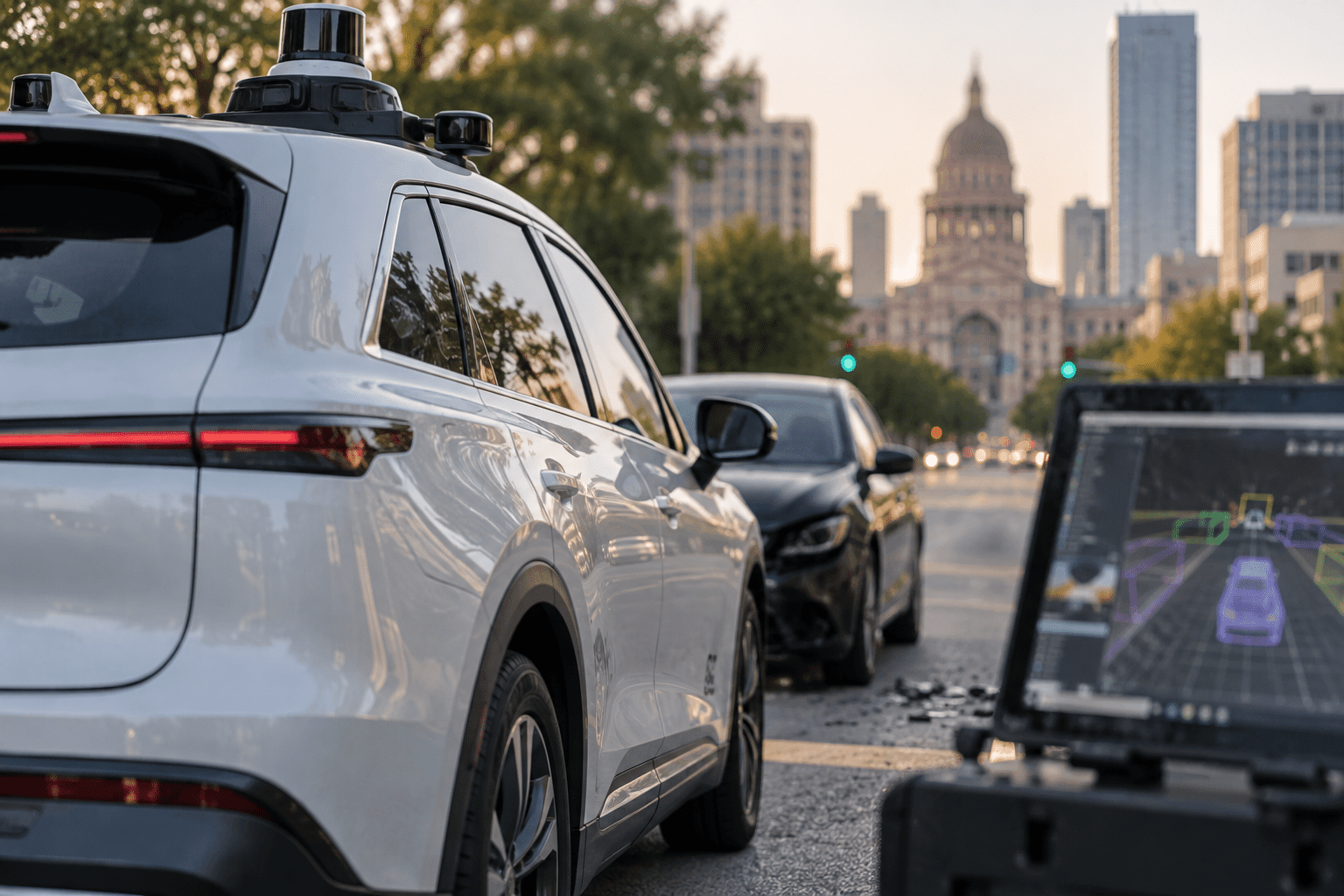
1. Onboard Telemetry and Event Data Recorders (EDR)
The single most crucial source of truth in an autonomous vehicle crash is the digital data recorded by the vehicle’s internal computer architecture. Unlike traditional passenger vehicles, autonomous and semi-autonomous vehicles record a constant, high-frequency stream of operational metrics.
Key data points that must be extracted and forensically analyzed include:
- System Engagement Status: Was the vehicle operating in full autonomous mode, semi-autonomous mode, or manual human control at the precise millisecond of impact?
- Driver Monitoring System (DMS) Logs: Did the system issue an auditory or visual takeover alert? If so, how many seconds or milliseconds prior to the collision was the alert issued, and did the human operator have sufficient time to react?
- Disengagement Records: Did the autonomous software log a “disengagement”—an automatic disengagement where the AI system unexpectedly failed or handed control back to the human driver moments before a hazard?
- Pre-Crash Dynamics: Exact records of throttle application, braking pressure, steering input, and speed calculations leading up to the crash.
Critical Warning: Telemetry data is completely controlled by the vehicle manufacturer or fleet operator. Without swift legal intervention—such as issuing formal spoliation letters and obtaining court orders—this digital evidence can be overwritten, erased during remote software updates, or withheld under corporate “trade secret” exemptions.
2. Raw Sensor Data: LiDAR, Radar, and Optical Cameras
Autonomous vehicles rely on an array of perception hardware to build a 3D model of their environment. Accessing the raw data from these sensors reveals exactly what the vehicle’s artificial intelligence “saw”—or catastrophically misidentified.
- LiDAR (Light Detection and Ranging): Captures 3D point-cloud maps of surrounding obstacles, vehicles, and pedestrians in real time.
- Radar and Ultrasonic Sensors: Measure distance, velocity, and closing speeds of adjacent objects, even in adverse weather or low-light conditions.
- HD Optical Camera Footage: Multi-angle video feeds continuously record lane markings, traffic signals, road signs, and surrounding traffic behavior.
Analyzing this raw perception data allows accident reconstruction experts to determine whether the vehicle’s algorithm misclassified a pedestrian, failed to detect a stopped emergency vehicle, or made a fatal miscalculation when merging onto an Austin highway.
3. Police Reports and Official First Responder Records
While digital telemetry takes center stage, traditional scene evidence documented by law enforcement officers remains a cornerstone of any Texas personal injury claim. Responding officers from the Austin Police Department or Travis County Sheriff’s Office record vital initial observations, road conditions, and preliminary statements.
You can purchase and review official crash report records through the Texas Department of Transportation Crash Report Online Purchase System.
When analyzing these official records, key details include:
- Initial statements from the vehicle occupant regarding automated feature reliance.
- Officer observations regarding potential driver distraction prior to a system handover.
- Statements from third-party eyewitnesses who observed the vehicle’s behavior prior to impact.
4. Software Versioning, Patch Logs, and Maintenance Records
Autonomous vehicle technology depends entirely on software updates and hardware maintenance. A thorough legal investigation must examine the maintenance and update history of the vehicle:
- Software Build & Release History: Was the vehicle running the most stable, factory-approved software version at the time of the collision?
- Uninstalled Safety Patches: Had the corporate fleet operator or manufacturer issued mandatory updates or safety recalls that were ignored or delayed?
- Hardware Calibration Logs: Were the LiDAR domes, radar sensors, and optical camera lenses properly cleaned, calibrated, and maintained prior to the trip?
5. Third-Party Surveillance and Mobile Video Footage
Independent video footage serves as an unvarnished check against internal corporate telemetry data. In bustling commercial areas, downtown Austin streets, or busy intersections, third-party video is crucial:
- Traffic surveillance cameras managed by regional transportation authorities.
- Dashcam recordings from surrounding passenger or commercial vehicles.
- Exterior security camera recordings from local businesses, stores, and residential properties.
Because many commercial security systems automatically overwrite footage within 24 to 72 hours, identifying and securing nearby video sources immediately after a crash is paramount.
Why You Need a Dedicated Trial Attorney on Your Side
Taking on corporate technology giants, autonomous fleet operators, and global automotive manufacturers is an immense task. These corporations deploy armies of defense lawyers and forensic engineers to shield their software code, delay proceedings, and minimize financial liability. You need a proven, fearless advocate who refuses to be outgunned.
Attorney Joe Lopez has been standing up for injured Texans since 2003, winning tough liability battles against major corporations, nationwide transit lines, and stubborn insurance companies. Having recovered over $100 million for clients—including multi-million-dollar recoveries in catastrophic vehicle and commercial transport crashes—Joe Lopez Law treats every single case as if it is headed straight to trial.
By intentionally limiting the firm’s caseload, Joe ensures that every client receives direct attorney access, personal communication, and unwavering focus from day one—never getting handed off to a junior associate or case manager. Joe is fluent in both English and Spanish (Se Habla Español), serving Austin’s diverse community with genuine, client-first advocacy. If you or a loved one was hurt in a collision, explore your rights with an experienced advocate handling Autonomous Vehicle Accidents in Austin who will relentlessly fight for the justice and full financial compensation you deserve.