


Austin Autonomous Vehicle Accident Lawyer
Experienced Autonomous Vehicle Accident Attorneys Serving in Austin, TX
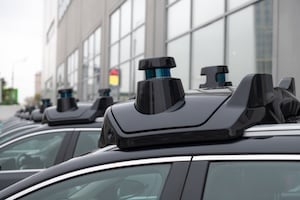 Austin has become one of the busiest testing grounds for self-driving technology in the country. Waymo, Tesla’s Robotaxi fleet, and Amazon’s Zoox all now operate on Austin streets, and autonomous delivery vehicles move through the city’s neighborhoods daily. Each company runs different hardware, different software, and a different answer to the question that matters most after a crash: who is responsible?
Joe Lopez Law has represented Austin car accident victims for over 25 years, and autonomous vehicle cases have become one of the fastest-growing parts of that work. These crashes don’t play out like an ordinary two-car collision. There may be no driver to interview, a corporate legal team already reviewing the incident within hours, and crash data controlled entirely by the company that built the vehicle. If a self-driving vehicle hurt you or someone you love in Austin, the company involved already has lawyers working the case. You need someone working it for you.
Key Takeaways
- Austin now has three major autonomous vehicle operators on public roads—Waymo, Tesla Robotaxi, and Zoox—plus autonomous delivery vehicles, and each raises different liability questions.
- Texas law (Transportation Code Subchapter J, Chapter 545) treats the automated driving system’s authorization holder as the “operator” for traffic law purposes, even when no human is behind the wheel.
- As of May 2026, companies operating autonomous vehicles commercially in Texas must hold a formal authorization from the Texas Department of Motor Vehicles.
- Crash-critical evidence—sensor logs, camera footage, remote operator communications—can be overwritten within days, so a preservation demand needs to go out immediately.
- Joe Lopez Law represents passengers, pedestrians, cyclists, and other drivers hurt in autonomous vehicle crashes in Austin—with no fees unless we win.
Austin’s Autonomous Vehicle Landscape
Austin didn’t ease into self-driving technology—it became one of the industry’s primary proving grounds almost overnight. Waymo launched its driverless robotaxi service here in March 2025 and has since expanded to roughly 90 square miles of the city. Tesla began testing its Robotaxi service in June 2025, initially with safety monitors on board, and has since started operating a smaller number of vehicles without anyone in the driver’s seat. Zoox, Amazon’s autonomous vehicle division, began testing its purpose-built robotaxis in Austin in March 2026, with vehicles that have no steering wheel or pedals at all.
Each company has taken a different technical approach. Waymo relies on LiDAR, radar, and camera arrays. Tesla uses a vision-only system built entirely on cameras and neural networks. Zoox’s vehicles are built from the ground up as robotaxis, with passengers seated facing each other rather than toward a windshield. None of that matters to a person recovering from an injury. What matters is that a machine, not a person, was making driving decisions in the moments before the crash—and figuring out why it made the choice it did requires pulling apart a system most people, including many lawyers, have never had to litigate before.
Who’s Operating on Austin Streets
Waymo
Waymo runs a fleet of over 100 fully driverless vehicles across Austin through the Uber app. There is no human driver and no backup safety monitor in the vehicle. Austin city officials have raised concerns about Waymo vehicles blocking emergency responders and driving through active incident scenes, and the company has faced a federal recall tied to some of these behaviors. Because Waymo vehicles operate with nobody behind the wheel, liability in a Waymo crash typically centers on the company itself, the software’s decision-making, or a defect in the vehicle’s sensors or systems.
Tesla Robotaxi
Tesla’s Austin fleet has operated with a mix of safety monitors and, more recently, a limited number of vehicles running without anyone inside. Tesla has reported over a dozen crashes to federal regulators since the service launched, several tied to a pattern worth noting: when the autonomous system gets stuck or confused, a remote teleoperator takes over control from a distance—and several of the reported crashes happened during exactly that kind of remote intervention. That creates a liability question distinct from Waymo’s cases: was the failure in the software, or in a human working the controls from somewhere else entirely?
Zoox
Zoox began limited testing in Austin in early 2026, with vehicles that lack a driver’s seat, steering wheel, or pedals. The rollout has started small—employees and early riders only—but Zoox has stated its intention to open the service to the public through a waitlist program. As Zoox’s presence grows in Austin, so will the number of crashes involving its distinctive, purpose-built vehicles.
Autonomous Delivery Vehicles
Beyond passenger robotaxis, autonomous delivery robots and vehicles increasingly share Austin’s sidewalks, bike lanes, and residential streets. These crashes tend to involve pedestrians and cyclists rather than other vehicles, and liability usually runs to the delivery company or the vehicle manufacturer rather than any individual.
What Makes These Cases Different from Ordinary Car Accidents
A standard Texas crash claim runs against the at-fault driver’s insurance. Autonomous vehicle cases don’t work that way, and the differences show up fast:
- There’s no driver to interview, and often no clear human decision-maker at all—just a system and, sometimes, a remote operator hundreds of miles away
- The vehicle recorded everything about the crash—camera footage, sensor data, decision logs—but the company controls that data and won’t hand it over voluntarily
- Insurance coverage runs through commercial fleet policies, rideshare platform agreements, and potentially your own uninsured/underinsured motorist coverage
- Liability theories can span ordinary negligence, product defect claims, and—where a remote operator was involved—a completely separate question about human error at a distance
That last point cuts in the injured person’s favor more often than companies would like to admit. If the data shows the system failed, or that a remote operator made the wrong call, it can be the strongest piece of evidence in the case. Getting to that data before it disappears is the hard part.
What to Do After an Autonomous Vehicle Accident in Austin
The steps you take in the hours and days after a crash have a direct impact on the strength of your case.
- Call 911 and get a police report filed. Make sure the report identifies which company’s autonomous vehicle was involved—Waymo, Tesla, Zoox, or another operator—since that detail shapes everything that follows.
- Get medical attention right away. Some injuries, especially concussions and soft tissue damage, don’t show up immediately. A treatment gap gives an insurance company a reason to argue you weren’t seriously hurt.
- Preserve your rideshare app records if you were a passenger. Trip history, timestamps, and route data establish that you were in the vehicle and when.
- Document the scene. Photos of the vehicle, your injuries, road conditions, and any signage. Get names and numbers for witnesses.
- Don’t speak with the company’s representatives or insurers without a lawyer. Their goal is a fast, cheap resolution before you understand the full scope of your injuries.
- Contact an Austin autonomous vehicle accident attorney immediately. Sensor logs, camera footage, and remote operator communications have limited retention windows. A formal evidence preservation demand needs to go out before that data is gone.
Texas Law on Autonomous Vehicles
Texas has built out one of the more detailed legal frameworks in the country for self-driving vehicles, and it keeps evolving. Senate Bill 2205, passed in 2017, first established that autonomous vehicles could operate on Texas roads under state—not local—regulation. Senate Bill 2807, passed in 2025, went further: as of May 2026, any company operating autonomous vehicles commercially in Texas, including robotaxis and delivery fleets, must hold a formal Automated Motor Vehicle Authorization from the Texas Department of Motor Vehicles.
Under Transportation Code Subchapter J, Chapter 545, when a vehicle’s automated driving system is engaged, the authorization holder is treated as the vehicle’s “operator” for purposes of traffic law compliance—regardless of whether anyone is physically inside. That designation matters for citations and regulatory enforcement, but it doesn’t resolve a personal injury claim on its own. A Texas negligence case still requires proving duty, breach, causation, and damages. The dispute simply shifts from “what did the driver do wrong” to “what did the system do wrong, and why.”
Texas’s proportionate responsibility rules also apply in full. Fault can be divided among the autonomous vehicle operator, another driver, or other parties, and an injured person can still recover as long as they’re found 50% or less at fault. Given how many parties can plausibly share blame in an AV crash—the software developer, the fleet operator, a remote operator, another driver—having someone build the liability case correctly from the start matters more here than in almost any other kind of crash.
The statute of limitations for personal injury claims in Texas is two years from the date of the accident. That two-year window is misleading, though. The practical deadline—the point at which crash-critical digital evidence disappears for good—is measured in days, not years.
What Compensation Can You Recover?
A successful autonomous vehicle accident claim in Texas can include:
- Medical expenses: From emergency treatment through ongoing care and future treatment needs
- Lost wages and reduced earning capacity: If your injuries keep you out of work short- or long-term
- Pain and suffering: Covering the physical and emotional impact of the crash
- Property damage: If you were in another vehicle struck by an autonomous vehicle
- Wrongful death damages: For families who have lost someone, including funeral costs and loss of companionship
Where a company’s conduct rises to gross negligence—a conscious disregard for a known, serious risk—punitive damages may also come into play. Given the documented safety concerns already raised about multiple Austin AV operators, that question deserves real scrutiny in every case.
How an Autonomous Vehicle Accident Lawyer Can Help
These cases move fast, and the company on the other side has resources most injured people don’t. A lawyer who handles autonomous vehicle claims will send an immediate preservation demand for sensor data, camera footage, and remote operator logs before they’re overwritten. From there, the work involves identifying every party who may share liability—the fleet operator, the software developer, a remote operator, another driver—building a case with expert analysis of the technical data, and negotiating from a position of strength rather than waiting to see what the company offers.
None of that requires money up front. Contingency fee representation means the firm advances the costs of investigation and expert review, and gets paid only if the case succeeds.
Why Choose Joe Lopez Law for Your Autonomous Vehicle Accident Case?
Joe Lopez has spent over 25 years representing Central Texas accident victims against drunk drivers, trucking companies, and insurance carriers that tried to lowball injured people. Autonomous vehicle companies are a newer kind of opponent, but the approach doesn’t change: investigate hard, preserve evidence fast, and hold out for a fair result.
Joe is licensed by the Texas State Bar, earned his J.D. from St. Mary’s University School of Law in San Antonio, and is a member of the Multi-Million Dollar Advocates Forum and the National Trial Lawyers Top 100. He’s also been recognized as a Texas Super Lawyer. Every case is handled personally—clients work directly with Joe, not a rotating cast of paralegals. He’s also fluent in Spanish, so language is never a barrier to getting help.
The firm has recovered over $100 million for clients across Central Texas, a track record built on being willing to take a case to trial when an insurance company’s offer doesn’t reflect what happened.
Frequently Asked Questions About Autonomous Vehicle Accidents in Austin
Who is liable if a self-driving car causes an accident in Austin?
Liability depends on what caused the crash and which company operated the vehicle. It may fall on the autonomous vehicle operator, the software or sensor manufacturer, a remote operator, or another driver—and often more than one of these at once. A thorough investigation into the specific vehicle and incident is the only way to know for sure.
Are Waymo, Tesla Robotaxi, and Zoox treated differently under Texas law?
The underlying legal framework—Texas Transportation Code Subchapter J and the TxDMV authorization requirement—applies to all commercial autonomous vehicle operators equally. What differs case to case is the technology involved and how each company's systems and personnel contributed to the crash, which changes how the liability investigation is built.
Discover how Texas law treats Waymo, Tesla Robotaxi, and Zoox after an autonomous vehicle crash.
Can I sue if I was a passenger in an autonomous vehicle when it crashed?
Yes. As a passenger, you were owed a duty of care by the company operating the vehicle. If a system failure or a remote operator's error caused your injuries, you have grounds for a claim. Preserve your rideshare trip records immediately, since they document your presence in the vehicle and the trip's timing.
What if another driver caused the crash, not the autonomous vehicle?
That's common in multi-vehicle collisions, and it's exactly why preserving the autonomous vehicle's onboard data matters. Sensor and camera data can reconstruct what the vehicle detected and how it responded, which either supports the other driver's fault or contradicts it.
How long do I have to file an autonomous vehicle accident claim in Texas?
Texas gives you two years from the date of the accident to file a personal injury lawsuit, and the same window applies to wrongful death claims. The practical deadline is much shorter, since digital evidence from the vehicle's onboard systems can be overwritten within days without a formal preservation demand.
What evidence matters most in these cases?
Sensor logs, camera footage, radar and LiDAR data (where applicable), and any remote operator communications. All of it is controlled by the company that owns the vehicle, which is why a preservation demand needs to go out immediately after the crash—along with a police report, photos of the scene, and witness information.
Does Texas law require a human driver in an autonomous vehicle?
No. Under Transportation Code § 545.454, a vehicle may operate with its automated driving system engaged regardless of whether a human driver is physically present, as long as the operating company holds the required TxDMV authorization.
Can I recover damages if I was a pedestrian or cyclist hit by an autonomous vehicle?
Yes. The duty of care an autonomous vehicle operator owes extends to everyone sharing the road, not just passengers. If the vehicle's system failed to detect or yield to you, the operating company may be liable for medical costs, lost income, and pain and suffering.
What if the autonomous vehicle company blames a remote operator instead of the software?
That distinction matters for building the case, but it doesn't change whether you're entitled to compensation. Whether a flawed algorithm or a remote operator's mistake caused the crash, the company that deployed the vehicle bears responsibility for the outcome.
How much does it cost to hire Joe Lopez Law for an autonomous vehicle accident case?
Nothing upfront. Joe Lopez Law works on contingency—no attorney's fees and no case expenses unless we win. Given the complexity of these cases and the resources on the other side, call for a free consultation and let us evaluate your case at no cost.
Talk to an Austin Autonomous Vehicle Accident Attorney Today
Autonomous vehicle crash evidence disappears fast, and the company involved is already building its defense. If a Waymo, Tesla Robotaxi, Zoox vehicle, or autonomous delivery vehicle caused you harm in Austin, contact Joe Lopez Law now. The consultation is free. We advance all case expenses. You pay nothing unless we win.
Joe Lopez Law — (512) 580-9962 1502 West Ave., Austin, TX 78701