




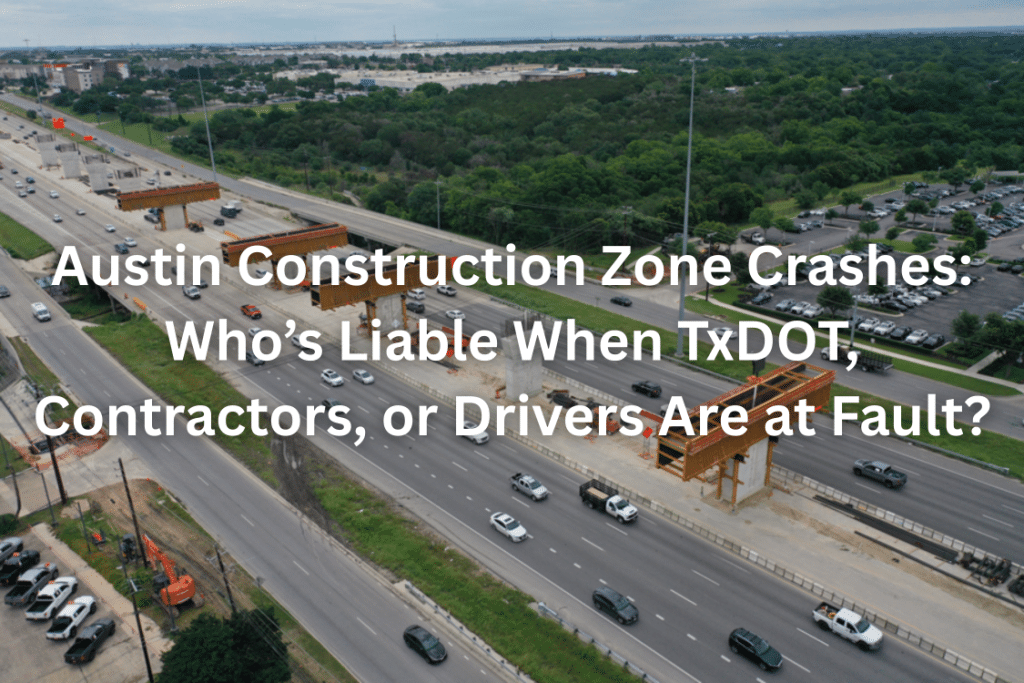
Construction zones are among the most hazardous areas on Texas roads, and Austin’s rapid growth has led to extensive highway projects that heighten these risks. According to the Texas Department of Transportation (TxDOT), in 2024 nearly 28,000 traffic crashes occurred in work zones across Texas, resulting in 215 deaths and hundreds of serious injuries statewide. TxDOT also noted this represented an increase in fatalities from the prior year, underscoring how dangerous work zones remain for drivers, passengers, and workers alike.
In Austin, major highway projects—most prominently the I-35 Capital Express program—have stretched for years and introduced complex and shifting traffic patterns. With serious injuries and fatalities in construction zones on the rise, one of the most common questions victims and families have is: who is liable when a collision happens in a work zone—a negligent driver, a contractor, or even TxDOT? The answer depends on the specific roles each party plays, whether statutory exceptions to government immunity apply, and how investigators interpret crash evidence.
Below, we break down the major construction projects in Austin, explain how liability works in work zone crashes, outline unique evidence you’ll need, and walk through what to do if you’re hurt.
Major Austin Projects Creating Hazards
I-35 Capital Express (North & South)
The I-35 Capital Express program is one of the largest transportation overhauls in Texas. TxDOT is adding managed lanes, rebuilding ramps, and reconfiguring intersections along I-35. The work has included frequent lane shifts, reduced travel widths, and recurring closures. TxDOT provides public project updates here: Capital Express North.
Construction of this scope can improve mobility long-term, but it also creates real-world risks in the short term: narrow lanes, abrupt merges, variable speed limits, heavy equipment, and changing traffic patterns. In March 2025, KUT reported on a fatal crash on northbound I-35 in Austin within an active construction zone and noted federal attention to work zone safety following the incident.
MoPac South and 183 North Mobility Projects
Other major work zones in the Austin area include ongoing improvements along MoPac and the 183 North corridor, which can involve recurring lane closures, detours, and changing access points. The 183 North project maintains public updates and construction information here: 183 North Mobility Project.
For illustrative maps and renderings of I-35 expansion segments and related projects in Austin, see below:
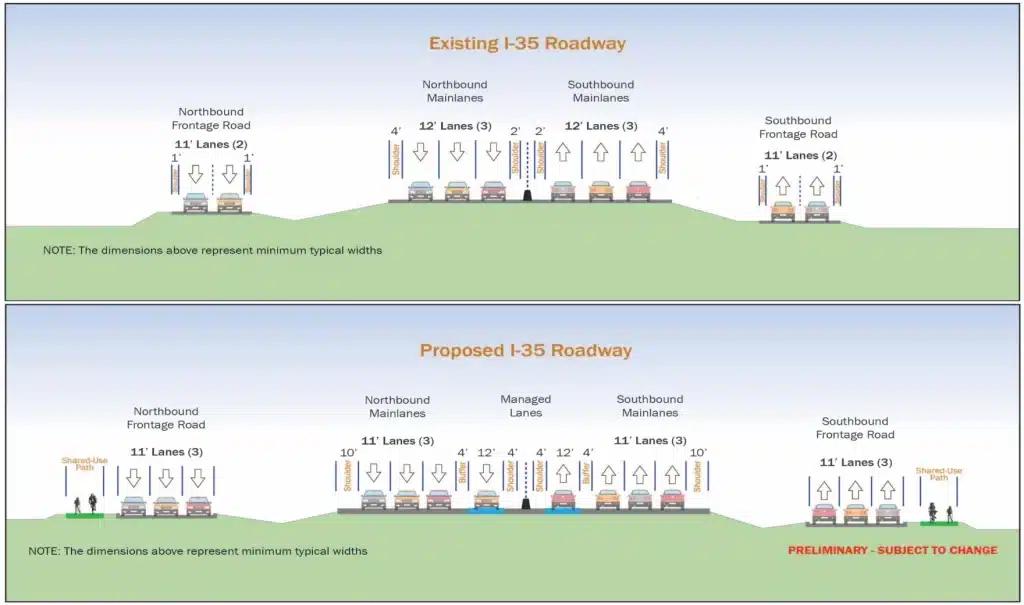
A basic cross-section showing a before and after of the I-35 CapEx North expansion. This image gives a general idea of how the highway will change. Source: www.kut.org.
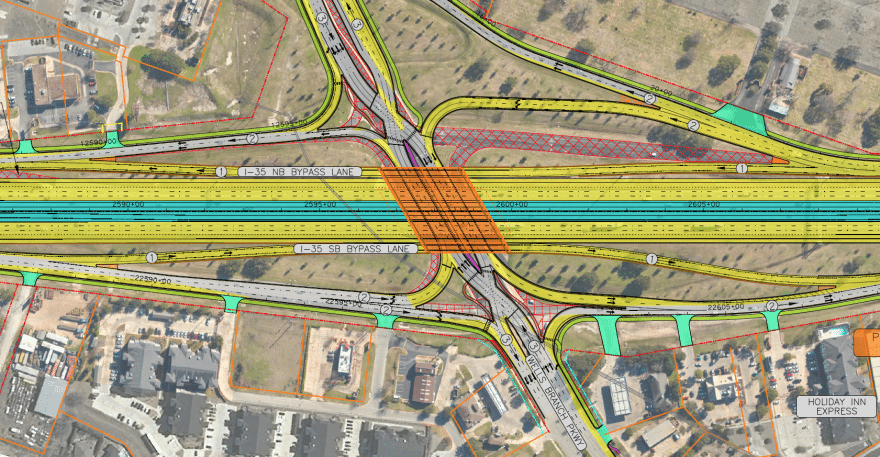
Schematic of the Wells Branch Parkway and I-35 intersection, showing planned bypass lanes, managed lanes and traffic patterns reconfigured into a “diverging diamond interchange.” Source: www.kut.org.
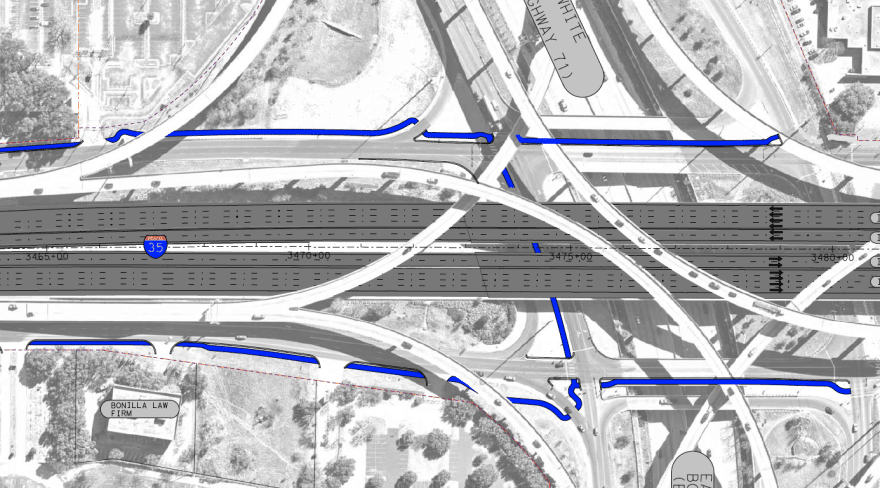
The I-35 CapEx Central project starts at Ben White Boulevard. The new managed lanes are shown in the middle of the highway, separated by a 4-foot buffer from four main lanes. The blue lines are shared-use paths. Source: www.kut.org.
Common Construction Zone Hazards
Across these projects, collision risks frequently involve issues such as:
- Confusing traffic patterns (sudden lane shifts or bottlenecks that force last-second decisions)
- Insufficient warning signs (misplaced, obscured, or missing signage reducing reaction time)
- Inadequate channelization devices (barrels or cones not placed to clearly delineate travel lanes)
- Narrowed lanes and reduced shoulders (less room to avoid impact or safely pull over)
- Poor lighting at night (reduced visibility when traffic patterns are already unfamiliar)
Because work zones change frequently, recording the exact conditions at the time of a crash is critical for any construction zone accident Austin claim.
Liability Breakdown in Construction Crashes
When a crash occurs in a work zone, more than one party could bear responsibility. Below is a practical breakdown of common liable parties, their duties, and typical deadlines under Texas law.
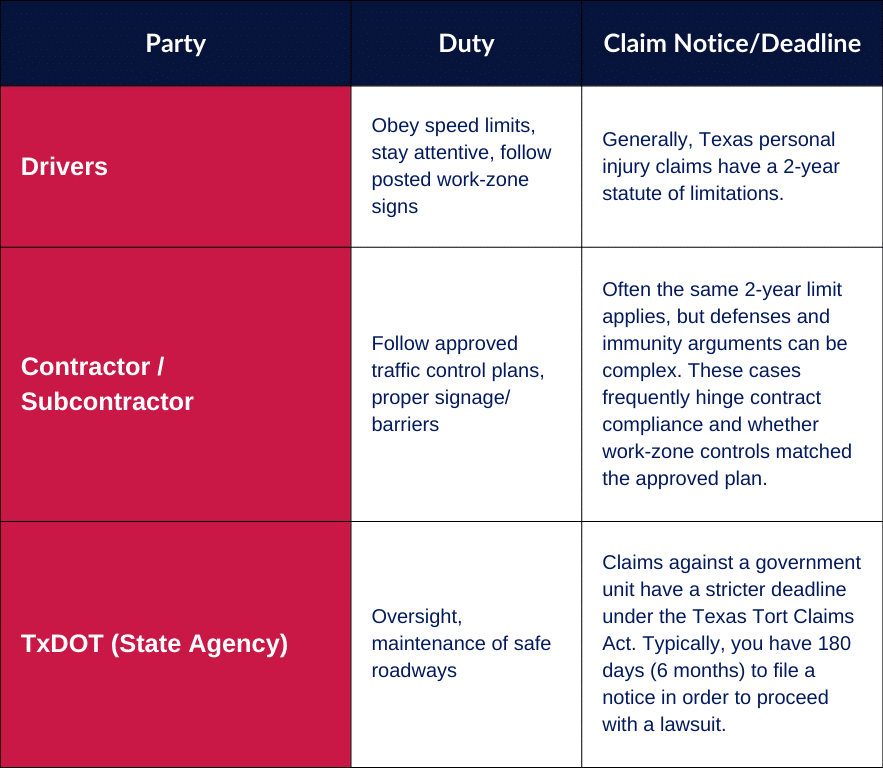
Drivers: In most construction zone crashes, a negligent driver is the first and most direct source of liability. If another driver rear-ends you due to tailgating or distraction, their insurance is typically primary.
Contractors: Private companies hired by TxDOT must implement approved traffic control plans. Liability arises if they fail, such as inadequate signage or misplaced barriers causing confusion.
TxDOT: As a state agency, TxDOT has sovereign immunity, but the Texas Tort Claims Act (TTCA) waives it for injuries caused by premise defects or negligence. Discretionary decisions like project design are usually immune. Crucially, claims against state agencies require formal notice within 180 days (6 months) of the incident in order to proceed with a lawsuit.
More Than One Party Can Be at Fault
Work zone wrecks often involve multiple contributing factors. In many cases, fault is shared—e.g., a speeding driver hits poorly placed barrels. Texas follows a modified comparative fault system. If you are found less than 51% at fault, you can still recover damages, reduced by your share of responsibility.
Evidence Unique to Work Zone Cases
Construction zone cases typically require more than a standard police report and photos. Because work zones change day-to-day, your legal team may need evidence that captures the exact layout and safety controls in place at the moment of the crash.
- TxDOT project documentation and daily logs to confirm lane closures, shifts, and active work at the time of the wreck.
- Traffic Control Plans (TCPs) to prove what signage and device placement was required versus what actually occurred.
- Contractor safety plans and any documentation showing how traffic control was supposed to be implemented.
- Work zone device placement evidence, including photos/video of barrels, cones, barricades, and sign placement.
- Crash scene photos/videos with timestamps, especially for nighttime visibility issues and sudden merges.
- Witness statements, including workers and motorists familiar with recurring problems at that location.
- Commercial vehicle electronic data if a truck was involved (for speed, braking, and driver behavior).
The faster an investigation begins, the better. If you wait, the construction configuration may change and evidence can disappear—making it harder to prove TxDOT liability in Texas or contractor negligence.
Steps to Take After a Construction Zone Wreck
- Get medical care (even if symptoms seem mild—some injuries worsen over time).
- Document the work zone (photos of signs, barrels, lane shifts, and lighting if it’s safe).
- Report to the police and request the crash report.
- Do not give recorded statements to insurers or adjusters without legal advice.
- Talk to a lawyer quickly—government notice deadlines can be much shorter than standard injury deadlines.
Beat the 6-month notice deadline—contact Joe Lopez Law today at (512) 580-9962.
Frequently Asked Questions about Austin Work Zone Accidents
Can I sue TxDOT for poor road design or signage?
Yes, but only under limited circumstances via the Texas Tort Claims Act, such as for certain premise defects. Strict 180-day notice applies, and many design decisions are immune.
What if a contractor set up the work zone incorrectly?
A contractor may be liable if it failed to follow approved traffic control plans, failed to maintain safety devices, or created an unreasonably dangerous condition. These cases often hinge on comparing the approved TCP and safety plans against what was actually placed at the scene.
How long do I have to file a claim?
In general, Texas personal injury claims must be filed within 2 years, but claims involving government entities may shorten the window to 6 months.
Does comparative fault apply in construction zone crashes?
Yes. Texas uses modified comparative fault. If you are less than 51% at fault, you can recover damages reduced by your percentage of responsibility.
Why Timing and Accountability Matter in Austin Work Zone Crashes
Construction zone crashes in Austin are rarely simple. A single wreck may involve a negligent driver, a private contractor, and a government agency—each with different legal duties, insurance coverage, and deadlines. When more than one party shares responsibility, identifying every liable entity can significantly affect the amount of compensation available for medical bills, lost income, and long-term recovery.
Joe Lopez Law helps injured Texans navigate these high-stakes cases. If you or a loved one were hurt in an Austin construction zone accident, getting legal guidance early can help protect your rights, preserve evidence, and determine who should be held accountable. Contact Joe Lopez Law to discuss your options before critical deadlines pass.