



Car and truck accidents in Austin can leave lasting scars—not just physical, but emotional and psychological. Many survivors struggle with post-traumatic stress disorder (PTSD) long after the crash scene is cleared. Studies show that up to 39% of motor vehicle accident survivors develop PTSD, according to research from the National Institute of Mental Health (NIMH). For those involved in severe crashes, the risk is even higher, with symptoms like flashbacks, nightmares, and intense anxiety disrupting daily life.
The good news? Texas law recognizes PTSD as a compensable injury in personal injury claims. If another driver’s negligence caused your accident, you can seek damages for emotional distress caused by the collision, including therapy costs, lost wages, and pain and suffering. These “invisible” injuries are just as valid as broken bones or whiplash.
At Joe Lopez Law, we’ve helped numerous Austin-area clients recover settlements for PTSD after car accidents in Austin. Invisible wounds deserve real compensation, and insurance companies often undervalue mental health claims. With strong evidence and experienced advocacy, victims can secure the financial support needed to heal.
If you’ve been in a crash and notice ongoing fear of driving, hypervigilance, or emotional numbness, don’t dismiss it. Seeking a professional diagnosis early strengthens your claim and starts your recovery.
Proving PTSD in Texas Courts
According to the American Psychiatric Association, posttraumatic stress disorder (PTSD) is a psychiatric condition that may occur in people who have experienced or witnessed a traumatic event, series of events, or set of circumstances that is perceived as emotionally or physically harmful or life-threatening.
When it comes to proving PTSD in a Texas personal injury case, it requires more than simply stating you’re traumatized. Courts and insurance companies demand objective evidence linking your symptoms directly to the accident. Texas law allows recovery for mental anguish, including PTSD, as part of non-economic damages—often without a strict “physical impact” requirement if the trauma stems from negligence causing the crash.
Key requirements include:
- A formal DSM-5 diagnosis from a qualified mental health professional (psychiatrist, psychologist, or licensed therapist).
- Evidence that the accident was the proximate cause of your PTSD.
- Documentation showing how symptoms impair your daily life, work, and relationships.
The DSM-5 outlines four main symptom clusters for PTSD:
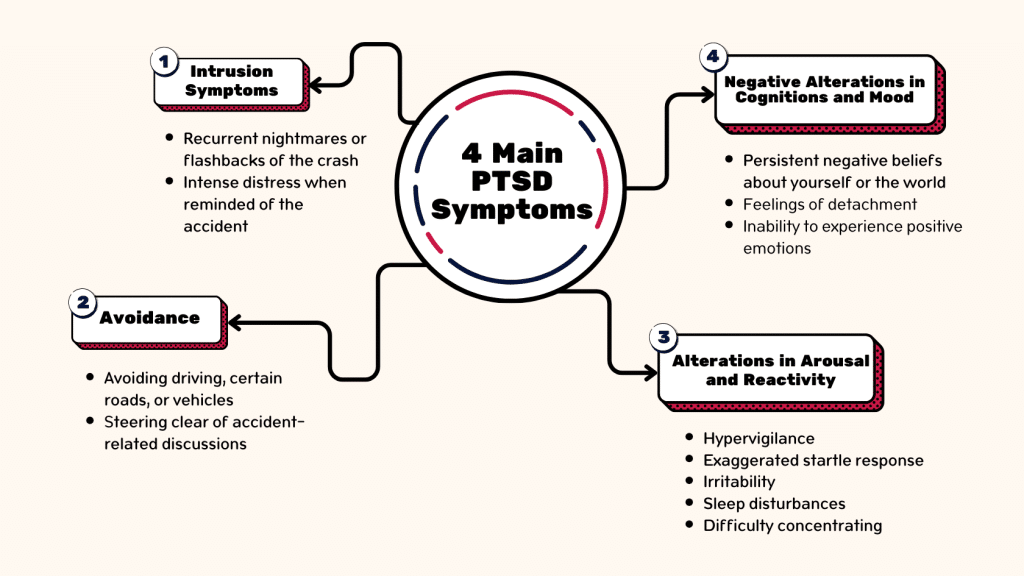
To meet criteria, symptoms must last more than one month and cause significant distress or impairment.
In Austin courts, successful claims often combine medical records with expert testimony. For example, a neuropsychologist can explain how the crash’s terror triggered PTSD, even without severe physical injuries. Texas juries have awarded substantial sums for emotional distress in truck wrecks, recognizing the heightened trauma from large commercial vehicles.
Insurance adjusters may argue symptoms are pre-existing or exaggerated. Counter this with timeline evidence: therapy notes starting soon after the crash, prescriptions for anti-anxiety medication, or witness statements about your changed behavior.
Related: Learn more about non-economic damages in our post on pain and suffering settlement examples in Texas.
Real Texas PTSD Settlement Outcomes from Car and Truck Accidents
While every case is unique, real outcomes show that Texas victims can recover meaningful compensation for PTSD when claims are well-documented. Below are four anonymized examples based on actual settlements and verdicts in Texas (including Austin-area cases), illustrating how evidence drives results.
Rear-End Car Collision (Austin highway)
- Key Symptoms & Impacts: Flashbacks, avoidance of driving, panic attacks, lost job due to anxiety
- Settlement/Verdict Amount: $125,000
- Key Evidence: DSM-5 diagnosis, therapy records over 18 months, employer testimony on absenteeism
18 Wheeler Truck Wreck (I-35)
- Key Symptoms & Impacts: Nightmares, hypervigilance, emotional numbness, relationship strain
- Settlement/Verdict Amount: $450,000 (policy limits)
- Key Evidence: Expert neuropsych evaluation linking trauma to crash severity, family affidavits
Head-On Car Accident (Central Texas)
- Key Symptoms & Impacts: Severe avoidance (refused to leave home), irritability, sleep loss
- Settlement/Verdict Amount: $85,000
- Key Evidence: Journal of daily symptoms, prescription records, psychologist testimony
Multi-Vehicle Pileup Involving Commercial Truck
- Key Symptoms & Impacts: Intrusion symptoms, negative mood changes, inability to work as driver
- Settlement/Verdict Amount: $275,000
- Key Evidence: Pre- and post-accident medical comparisons, vocational expert on lost earning capacity
These outcomes highlight variability; higher awards often involve commercial trucks due to greater perceived danger and insurance limits. Strong medical linkage and proof of life impact are crucial.
At Joe Lopez Law, we’ve secured similar results by aggressively pursuing maximum value for mental health injuries.
Building a Bulletproof PTSD Case
Strong PTSD claims rest on thorough documentation and expert support. Start immediately after the accident:
- Seek professional help promptly: Get a DSM-5 diagnosis and begin therapy. Consistent records prove the timeline.
- Keep a personal journal: Note daily symptoms, triggers (e.g., near-misses on the road), and impacts (missed work, strained relationships).
- Obtain a neuropsychological evaluation: This objective testing rules out other causes and quantifies impairment.
- Gather supporting evidence: Witness statements from family/friends about your personality changes; work records showing reduced performance; photos/videos of the crash scene if possible.
- Work with an experienced attorney: Firms like Joe Lopez Law know how to present mental health evidence compellingly to insurers and juries.
Avoid common pitfalls: Delaying treatment can weaken causation arguments. Be honest in depositions—exaggeration risks credibility.
With these steps, your Austin trauma claim stands stronger, increasing chances for full compensation covering therapy, lost income, and emotional distress.
Get Started on Your Mental Health Claim
If PTSD symptoms are affecting your life after an Austin car or truck accident, you don’t have to suffer in silence. Joe Lopez Law offers free case consultations to review your situation and explain your options—no obligation.
Contact us today for compassionate, aggressive representation focused on maximum recovery.
Frequently Asked Questions About PTSD Claims in Austin
How long do I have to develop PTSD to file a claim in Texas?
Symptoms can appear immediately or delayed (even months later). Texas's statute of limitations is generally 2 years from the accident date, but the "discovery rule" may apply if symptoms emerge later. Consult an attorney promptly.
Can I claim PTSD without physical injuries?
Yes—Texas recognizes pure emotional distress in negligence cases like accidents, especially with a formal diagnosis and strong causation evidence.
What's the average PTSD settlement after a car accident in Austin?
Amounts vary widely ($50,000–$300,000+), depending on severity, evidence, and insurance limits. Severe cases with life impacts yield higher outcomes.
Does insurance cover therapy for PTSD?
Yes, through the at-fault driver's liability or your own coverage. Settlements often include future treatment costs.
Can truck accidents lead to higher PTSD awards?
Often yes—the sheer size and force of commercial trucks amplify trauma, leading to larger emotional distress claims.
Secure the Compensation You Deserve for Your Austin PTSD Claim
PTSD after a car or truck accident is a serious injury that deserves full compensation under Texas law. From diagnosis to settlement, the right support makes all the difference. Invisible injuries like emotional distress from a wreck can upend lives, but real recoveries are possible.
If you’re searching for help with a PTSD claim after a car or truck accident in Austin, reach out to Joe Lopez Law. We’ve fought for victims across Texas and are willing to do the same for you.