





For anyone living in Central Texas, the “I-35 vs. MoPac” debate is a daily reality. Whether you are commuting from Round Rock or heading south toward Buda, these two arteries define the Austin driving experience. But beyond the frustration of gridlock and “stop-and-go” traffic lies a more serious question: Which highway is actually more dangerous?
While MoPac (Loop 1) is often seen as the scenic, slightly more predictable route, and I-35 is notorious for its heavy-duty chaos, the data tells a complex story. At Joe Lopez Law, we represent victims of highway accidents every day. Understanding the unique risks of these roadways isn’t just about choosing a better route—it’s about knowing your rights if the unthinkable happens.
Austin Crash Data Comparison: By the Numbers (2023–2025)
To determine which highway is more hazardous, we look to the most recent statistics provided by the Texas Department of Transportation (TxDOT) and Austin’s Vision Zero initiative.
Total Crashes
Interstate 35 consistently remains one of the most crash-prone corridors in the state. In the Austin metro area, I-35 accounts for a significantly higher volume of collisions compared to MoPac.
- I-35: According to recent TxDOT City Crash Statistics, Austin sees an average of over 11,000 to 12,000 reportable crashes annually. A massive portion of these occur along the I-35 corridor.
- MoPac (Loop 1): While still a high-traffic area, MoPac typically sees a lower volume of total collisions than I-35, largely due to the absence of heavy commercial long-haul trucks.
Fatal & Injury Crashes
The severity of crashes on I-35 is where the danger becomes most apparent. Due to the presence of 18-wheelers and higher speed variations, I-35 sees a disproportionate number of “KABCO” (Fatal and Serious Injury) events.
- Fatalities: In 2024, Austin recorded 103 traffic fatalities, up from 94 in 2023. A significant number of these fatal incidents were concentrated on I-35, including many involving pedestrians and high-speed multi-vehicle impacts.
- MoPac: Crashes on MoPac are frequently “fender benders” or rear-end collisions in stop-and-go traffic. While serious injuries occur, the frequency of high-speed fatal impacts is historically lower than on the Interstate.
Most Dangerous Stretches and Exits
Data from 2023–2025 highlights specific “hot zones” where drivers should exercise extreme caution:
- I-35 Danger Zones: The intersection of I-35 and Parmer Lane consistently ranks as one of the most dangerous intersections in Austin. Other high-risk areas include the I-35/Ben White (Hwy 290) interchange and the Cesar Chavez exit.
- MoPac Danger Zones: The North MoPac Expressway near Scofield Ridge and the merge points near the US-183 interchange are consistent sites for multi-car pileups.
Why I-35 Is Dangerous: The “Heavy Lifter” of Texas
I-35 is the primary trade artery for North America, and that role comes with inherent dangers that MoPac doesn’t share.
1. Upper/Lower Deck Design
The split-level design through downtown Austin (the “Decks”) is a nightmare for navigation. Drivers frequently make last-second lane changes to exit or enter the upper deck, leading to side-swipe accidents and high-speed rollovers.
2. Heavy Truck Traffic
Unlike MoPac, I-35 is flooded with commercial big rigs. A collision with an 80,000-pound semi-truck is significantly more likely to result in catastrophic injury than a collision between two passenger cars.
3. Construction Zones
The massive I-35 Capital Express project is currently underway. Construction means narrowed lanes, concrete barriers with no shoulders, and shifting exit ramps—all of which increase the likelihood of driver error.
4. Speed Variations
Traffic on I-35 can go from 70 mph to a dead stop in seconds. This volatility is a leading cause of multi-vehicle rear-end chain reactions.
Why MoPac Is Dangerous: The Commuter’s Trap
While MoPac may lack the 18-wheelers of I-35, it presents its own unique set of hazards.
1. Express Lane Confusion
Since the introduction of the variable-toll Express Lanes, accidents have occurred at “ingress” and “egress” points. Drivers often dive across the plastic pylons to avoid a high toll or to catch a last-minute exit, causing high-speed collisions.
2. Curved Sections and Limited Shoulders
Unlike the relatively straight stretches of I-35, MoPac features significant curves—particularly near Lady Bird Lake and the Arboretum. In rainy conditions, these curves become slick, leading to hydroplaning accidents.
3. Speed Differentials
One of the biggest dangers on MoPac is the difference in speed between the Express Lane (often moving at 70+ mph) and the stalled general-purpose lanes. When a driver tries to merge from a dead stop into high-speed traffic, the results are often devastating.
How Your Location Affects Your Legal Case
If you are involved in a crash, where it happened matters more than you might think. From a legal perspective, the highway determines the “venue” and the types of evidence we can collect.
- Evidence Availability: I-35 has extensive TxDOT camera coverage, but because of the high volume of traffic, physical evidence (like skid marks) is often cleared or destroyed quickly by emergency crews.
- Witness Identification: On MoPac, many drivers are daily commuters. We often have better luck finding witnesses who saw the accident during their routine drive. On I-35, many witnesses are long-haul truckers or out-of-state travelers who may be harder to track down.
- Liability Factors: In construction zones (especially on I-35), liability may extend beyond the other driver. We investigate whether poor signage, improper lane markings, or contractor negligence contributed to the crash.
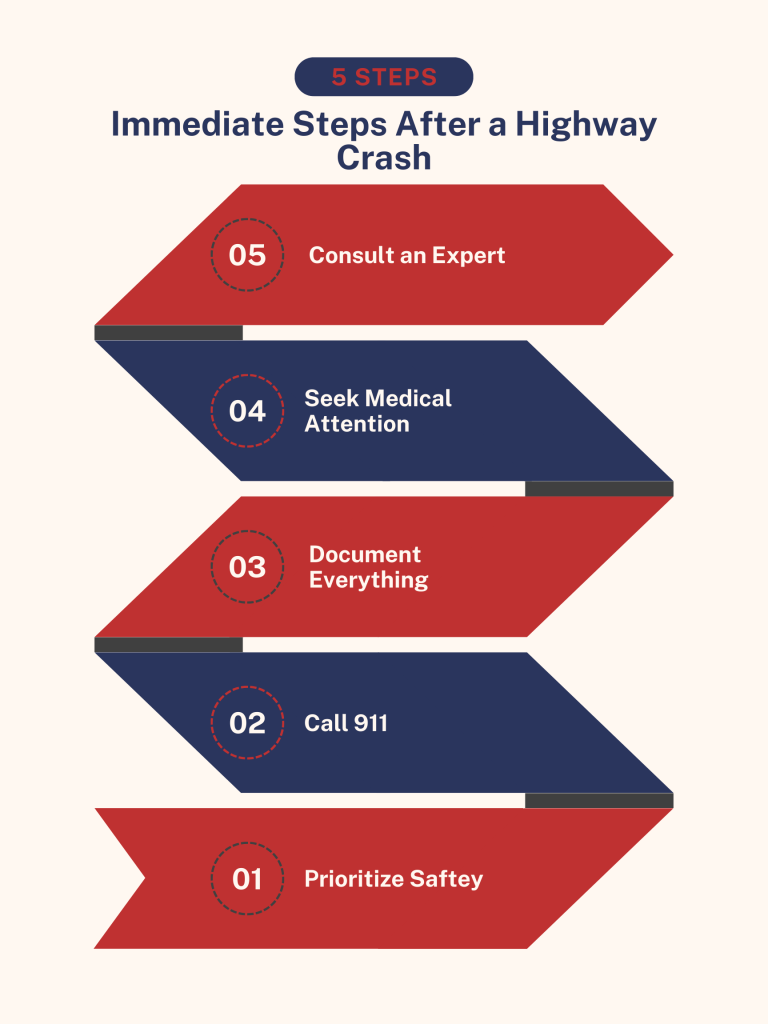
What to Do If You’re in an Austin Highway Crash
- Safety First: If possible, move your vehicle to the shoulder. On MoPac, shoulders are narrow, so stay inside your vehicle with your seatbelt on until help arrives.
- Call 911: Austin Police (APD) or State Troopers need to document the scene, especially for insurance purposes.
- Document Everything: Take photos of the road conditions, the “Express Lane” signage (if on MoPac), or any construction barriers (if on I-35).
- Seek Medical Attention: High-speed highway accidents often cause internal injuries or delayed onset whiplash that may not be apparent at the scene.
- Consult an Expert: Do not give a recorded statement to an insurance company until you’ve spoken with a lawyer who understands Austin’s specific highway laws.
Conclusion: Which Is More Dangerous?
While MoPac has its share of commuter hazards and “lane-diving” accidents, I-35 remains the more dangerous highway in terms of fatality rates and the severity of injuries. The combination of massive commercial trucks, confusing deck splits, and endless construction makes I-35 a high-stakes environment for every driver.
Highway Accident Case Review: Contact Joe Lopez Law
Whether you were hit by a distracted driver on MoPac or an 18-wheeler on I-35, you deserve an attorney who knows these roads as well as the locals do. At Joe Lopez Law, we specialize in holding negligent drivers and trucking companies accountable.
Injured on an Austin highway? Don’t wait. Call us today at (512) 580-9962 or contact us online for a free, no-obligation case review.