
Many Austin drivers brush off a fender bender as insignificant, particularly when damage seems limited and no pain surfaces right away. However, even low-impact collisions can trigger substantial unforeseen expenses. According to the National Highway Traffic Safety Administration (NHTSA), motor vehicle crashes cost the U.S. $340 billion in 2019, encompassing medical expenses, lost productivity, and property damage.
These expenses can arise from medical treatments for injuries like whiplash, which can manifest hours or days later, alongside disruptions such as missed work and vehicle devaluation. The Centers for Disease Control and Prevention (CDC) notes that nonfatal crash injuries alone generated millions of emergency department visits annually from 2019–2020, with associated lifetime medical and work-loss costs averaging thousands per case. In Texas, bodily injury claims from such accidents can exceed $15,000 on average, per state insurance data trends.
Minor incidents, often involving rear-end collisions common on Austin’s I-35, frequently lead to delayed symptoms that inflate costs beyond initial estimates. For Austin residents navigating congested routes, recognizing these risks is vital to safeguarding financial stability.
TxDOT data shows Texas roadways saw a fatality rate of 1.30 per 100 million vehicle miles traveled in 2022, but nonfatal minor crashes far outnumber them, driving up indirect costs like productivity losses. Understanding these layers empowers victims to seek appropriate recourse. At Joe Lopez Law, we assist Austin clients in uncovering and claiming full compensation for these overlooked damages, ensuring no detail is missed in your recovery journey.
Delayed Injuries You Can’t Ignore
A deceptive trait of minor car accidents is the delayed onset of injuries, often obscured by post-crash adrenaline. This “fight-or-flight” response numbs immediate discomfort, allowing symptoms to surface later—sometimes days or weeks—turning a minor-seeming event into a prolonged ordeal. In Austin’s high-traffic environment, where low-speed rear-enders are prevalent, TxDOT reports thousands of such incidents yearly, many evolving into reportable injuries such as:
Whiplash: a rapid neck snap from impact strains muscles, ligaments, and nerves. Symptoms like stiffness, pain, and headaches typically onset within 24–48 hours, though some appear up to 72 hours later.
Concussions: involves brain jostling without skull fracture. Even mild cases can delay with headaches, dizziness, or confusion emerging over days.
Soft-tissue damage: includes back strains with inflammation that builds gradually.
These delays complicate recovery and claims. Untreated, they risk chronic issues—whiplash may lead to ongoing neck pain, while concussions heighten risks of post-concussion syndrome. Medical intervention is crucial, as early care prevents escalation. In Texas, where fault-based insurance prevails, linking delayed symptoms to the crash requires prompt documentation; insurers may contest unrelated causation without it.
Costs mount swiftly. CDC’s WISQARS tool estimates nonfatal injury medical expenses at thousands initially, with lifetime totals higher for lingering effects. For minor whiplash or strains, average U.S. costs hit $13,700–$27,400 per case, covering diagnostics like MRIs and therapy sessions. In Texas, TxDOT economic analyses peg average injury costs per crash at over $20,000 when including lost productivity.
Data underscores prevalence: 39% of rear-impact occupants sustain minor (AIS1) injuries, often delayed. Austin’s urban density exacerbates this—congested merges invite low-impact hits prone to whiplash. Victims should track symptoms via journals and seek evaluation if pain persists, as Texas law supports claims with medical records from within days of onset.
Here’s a table summarizing common delayed symptoms, onset timelines, and average costs:
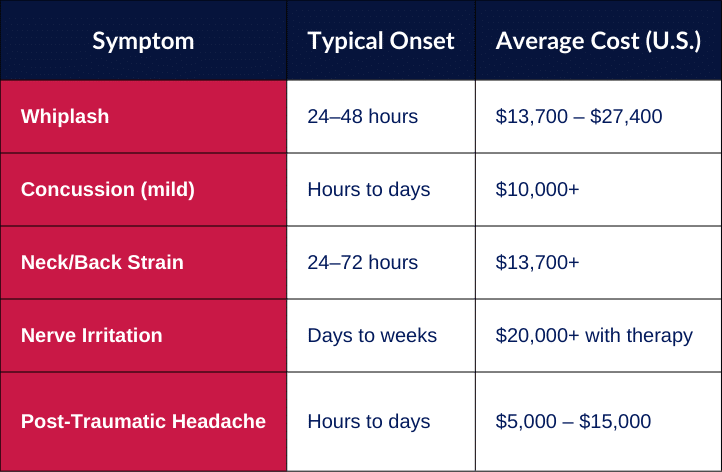
These draw from NIH/CDC injury cost models and Mayo Clinic timelines; actual Austin figures vary by provider, but statewide injury crashes cost billions annually. Proactive care not only heals but bolsters claims, whereas delaying care puts a claim at risk. For Austin whiplash cases, settlements often reflect documented expenses, emphasizing timely specialist visits over self-diagnosis.
Non-Medical Hidden Costs in Texas
Medical fees dominate headlines, but non-medical hidden costs from minor car accidents erode finances just as fiercely. In Austin, these encompass transportation alternatives, income loss, and vehicle depreciation, often totaling thousands in the aftermath.
- Rental Car Expenses: If your vehicle is in the shop, you’ll need a temporary replacement. Daily rental rates in Austin can average $70, with good deals hovering around $50. For a 30-day repair period, this could add up to $1,500 and beyond. These costs are recoverable, yet are often overlooked in hasty settlements.
- Lost Wages: Injury downtime or appointments that require you to miss work can slash earnings. Even minor cases contributing to short-term absences can be critical in Austin’s gig-heavy economy.
- Diminished Vehicle Value: Even after repairs, your car’s market value drops. On average, this hit is about $500, but can reach $3,000 or more for minor accidents. Vehicles may depreciate 10% to 30% post-accident.
These costs accumulate rapidly. Lost income from inability to work is a major hidden expense, especially if injuries linger. In Texas, property damage claims average over $3,000. Add insurance rate hikes and therapy travel, and minor car accident costs in Austin start to add up. Documenting these expenses is vital for claims, as insurers may overlook them.
Other factors include towing fees, storage, or alternative transport like rideshares. For Austin residents, commuting without a car means relying on public transit or Uber, adding daily expenses. Overall, these non-medical elements can exceed medical costs in some cases, emphasizing the need for comprehensive compensation.
How Insurance Downplays Minor Crashes in Austin
Insurance companies often minimize payouts for minor crashes through various tactics. They may issue lowball offers quickly after the accident, hoping victims accept before realizing full costs. These settlements fail to cover all damages, including ongoing treatment.
Adjusters downplay injury severity, claiming they’re pre-existing or not serious to justify lower amounts. For low-impact wrecks, they argue minimal damage means no real harm, ignoring delayed symptoms. Tactics include manipulative negotiations to undervalue claims.
“Total loss” declarations can shortchange owners if the vehicle is deemed uneconomical to repair, offering below-market value. In Austin, where accidents are common, these strategies limit recoveries. Victims should avoid signing quickly and consult an attorney to counter lowballs.
Maximize Recovery for Seemingly Small Austin Wrecks
To get fair compensation after a minor crash, gather evidence like police reports, medical records, and expense logs. In Austin, proving negligence is key under Texas law.
Hire a personal injury attorney experienced in car accidents to negotiate with insurers and avoid lowball traps. They can calculate full damages, including hidden costs, for better settlements.
Don’t settle too soon—wait until injuries stabilize. For Austin whiplash settlements or other claims, professional help maximizes outcomes.
Free crash evaluation – Joe Lopez Law
Call for a no-obligation consult at (512) 580-9962.
We investigate, negotiate, and litigate for the full recovery you deserve.
Schedule Your Free Consultation →
Frequently Asked Questions About Minor Car Accidents in Austin
Should I see a doctor after a minor accident?
Seek care within the first 72 hours after a minor car accident, even if you have no immediate symptoms. Adrenaline can mask pain; early visits help serve as documentation for claims.
What if I feel fine right after the crash?
Monitor yourself closely—delayed symptoms are common. Don't ignore mild pain such as neck pain, dizziness, or headaches. The CDC advises check-ups for whiplash risks; medical records strengthen car accident claims in Texas.
Can I claim lost wages from a minor accident?
Yes, if injuries cause missed work; provide proof like pay stubs.
How does diminished value affect my claim?
Even after repairs, accidents can damage the value of your vehicle. On average this reduction can be anywhere from $500-$3,000 or more. You can seek compensation for your car's reduced resale value.
Should I report a minor accident to police?
Yes, having official records bolster a claim. Even no-injury crashes benefit from documentation.
Don’t Let a “Minor” Crash Become a Major Financial Burden
No accident is minor when hidden costs—medical, wages, devaluation—pile up. The good news? In Texas, prompt action secures compensation.
Contact Joe Lopez Law today for a free, no-obligation review of your crash. We’ve helped hundreds of Austin drivers turn “small” wrecks into full, fair settlements—and we’re ready to do the same for you.
